What Are Strip Footings?
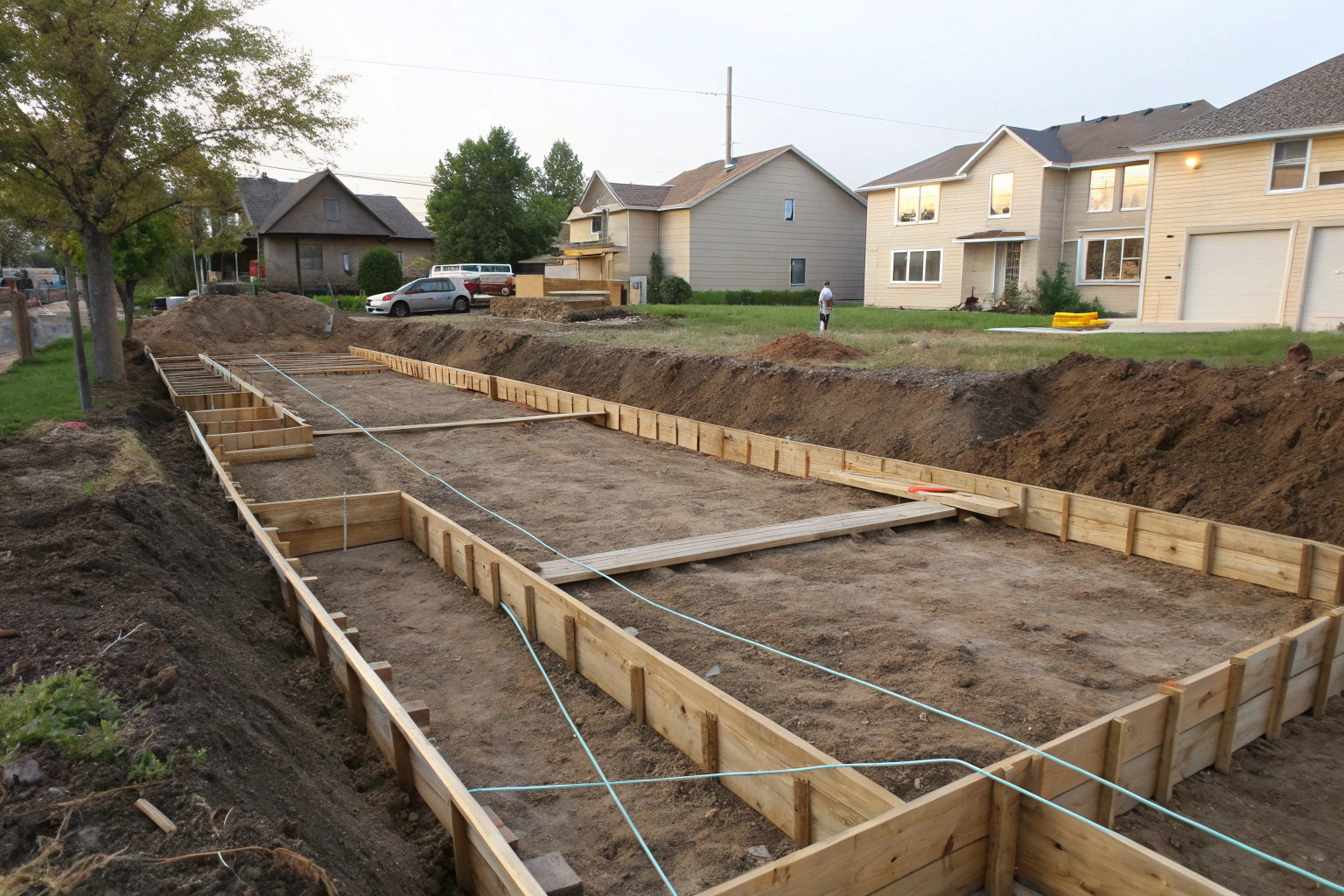
A strip footing is a continuous reinforced concrete beam poured below ground level along the line of a load-bearing wall, distributing the wall’s load across a greater soil area than a single pad footing could. They are one of the most widely used foundation types in Australian residential construction.
Strip footings are commonly used for:
- Brick veneer and double brick homes — the standard perimeter and internal wall footing system
- Home extensions and additions — new footings poured adjacent to or connected with existing foundations
- Masonry and block retaining walls — providing a continuous structural base
- Secondary dwellings and granny flats — typically specified as the default foundation system in council-approved designs
- Light commercial masonry structures — where engineer documentation governs dimensions and reinforcement
Strip footings in the Coffs Harbour region must account for reactive clay soils and high rainfall — meaning depth, width, and reinforcement requirements vary significantly by site classification.

Why Strip Footings Are the Standard Foundation Choice for Coffs Harbour Homes
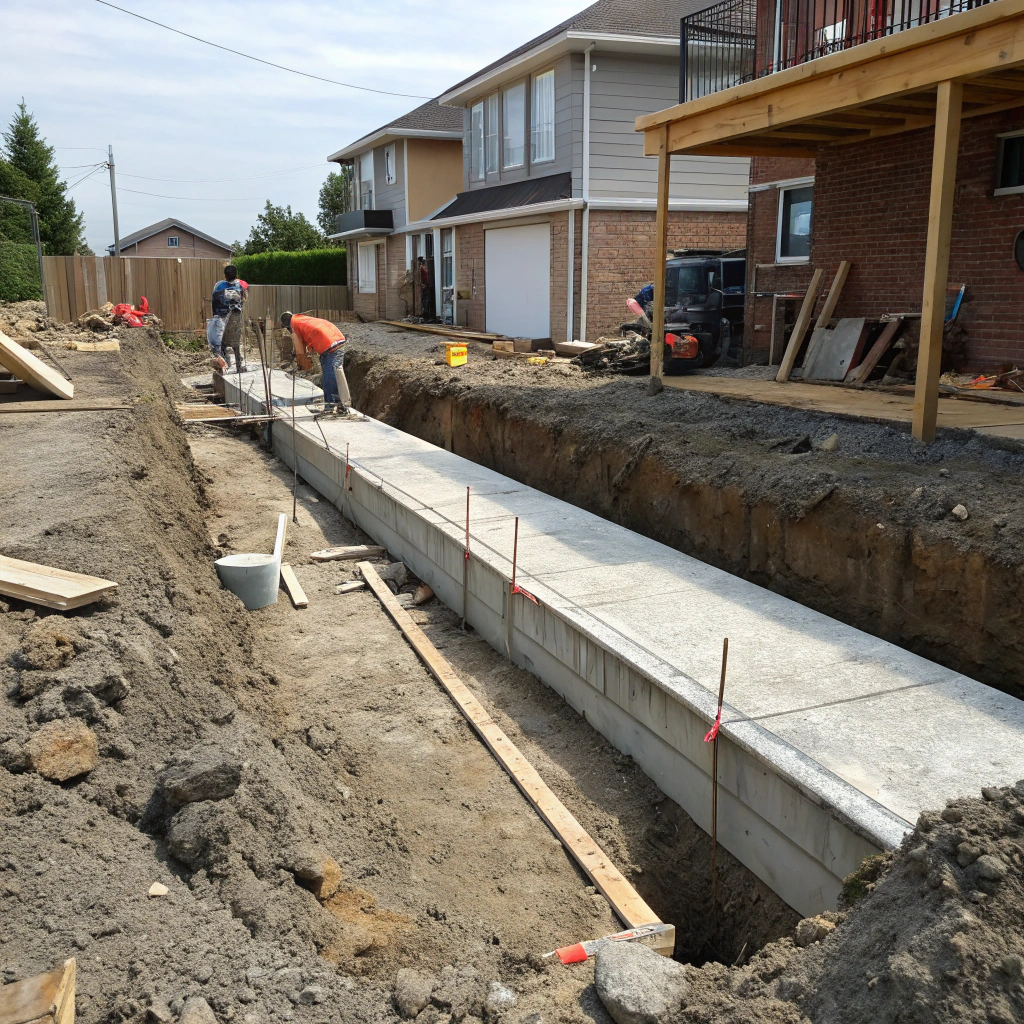
The housing stock across Coffs Harbour and its surrounding suburbs is dominated by brick veneer and double brick construction, and strip footings are the foundation system around which those buildings are designed. Walk through Toormina, Boambee East, or Sawtell and the majority of homes sitting on those blocks were built on continuous reinforced strip footings running along every load-bearing wall line.
That prevalence isn’t coincidental. Strip footings suit the way residential construction works in this region — they distribute wall loads evenly across the soil, they’re compatible with the block and brick masonry that defines the local housing stock, and they’re what engineers specify by default when designing for mid-north coast ground conditions. For new builds, extensions, and secondary dwellings alike, strip footings are the starting point — not one option among many.
Why Strip Footing Construction in Coffs Harbour Requires Local Knowledge
Not every concreter who can pour a slab understands what strip footing work demands in this region.
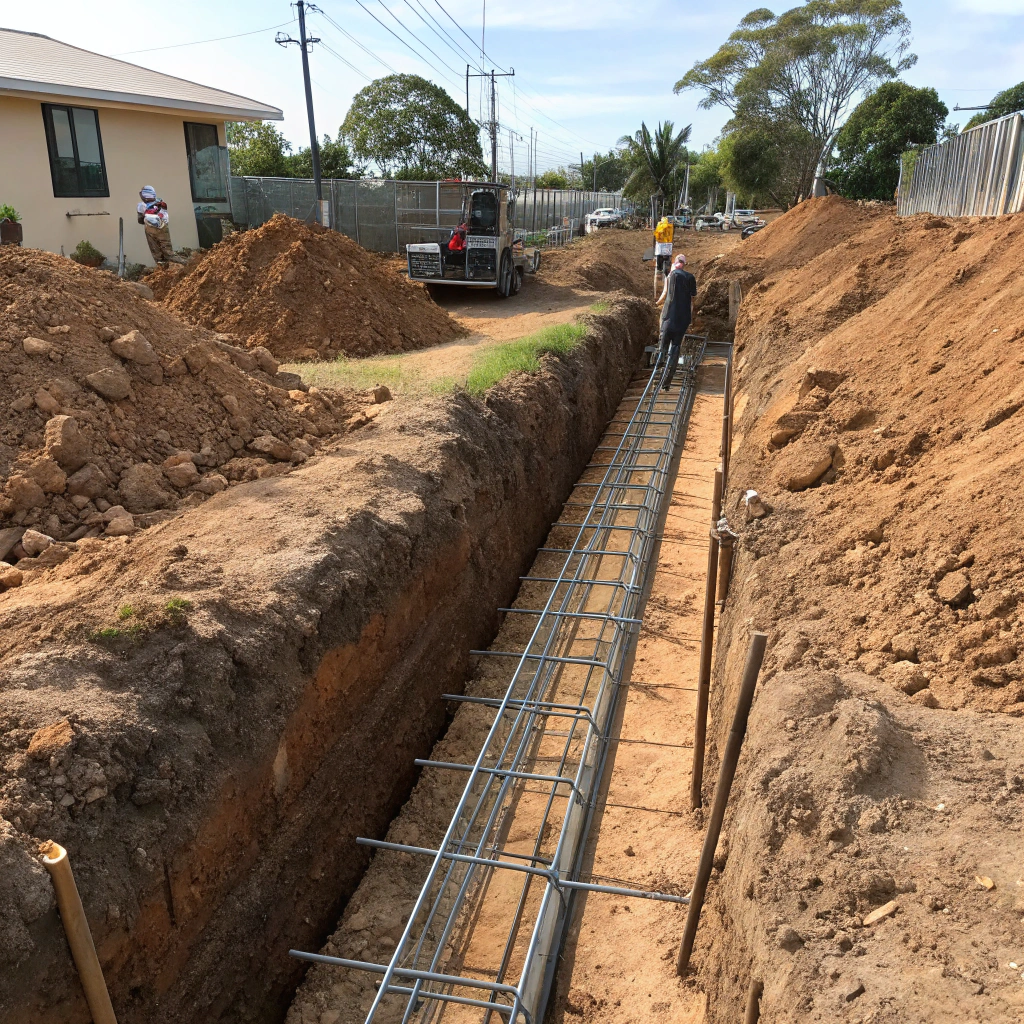
Coffs Harbour sits on some of the most reactive clay soils on the mid-north coast. Suburbs like Toormina and Boambee East are well-known for highly reactive profiles that expand and contract significantly with moisture changes — and that movement directly drives footing depth, width, and reinforcement requirements. Those requirements vary from one street to the next, depending on the site classification your engineer has assigned.
Then there’s the rainfall. An excavated trench can go from clean formation to waterlogged overnight during a summer storm, compromising the bearing surface before a single bar of steel goes in.
Getting it right here means reading the engineer’s documentation carefully, understanding what the site classification is telling you, and executing to those specs without shortcuts.
Why Strip Footings Are the Standard Foundation Choice for Coffs Harbour Homes
Soil Conditions and Site Classification in the Coffs Harbour Region
Before any footing is designed, the ground beneath your site needs to be understood — and in the Coffs Harbour region, that ground varies a lot from one suburb to the next.
Australian standards rate residential sites from Class A, which is stable and predictable, through to Class P, which needs special engineering. Most established suburbs across Coffs Harbour sit in the middle of that range — ground that contains reactive clay, meaning it swells when wet and shrinks when dry.
Toormina, Boambee East, and parts of Sawtell are well-known for this type of soil. A highly reactive site in Toormina needs deeper, wider footings with more steel than a less reactive site a few streets away. That’s why footing dimensions can’t be guessed — they come from an engineer’s assessment of your specific block, and we build exactly to what those drawings say.
Working From Engineer Documentation
Every strip footing job we take on is built from engineer-provided structural drawings — and reading those drawings correctly is as important as the physical work itself.
Engineer documentation specifies everything that matters on a footing job: trench dimensions, concrete strength, bar sizes, steel spacing, and the amount of concrete cover over the reinforcement. Each of those details exists for a reason tied to the site classification, the load the footing is carrying, and the design life of the structure.
Our job is to build what the drawings say — not to interpret, adjust, or substitute based on what’s easier or cheaper on the day. If something on site doesn’t match what the documentation describes, we raise it with the engineer before proceeding. That’s what working to hold points and engineer sign-off actually means in practice — and it’s the only way strip footing work gets done correctly on a mid-north coast site.
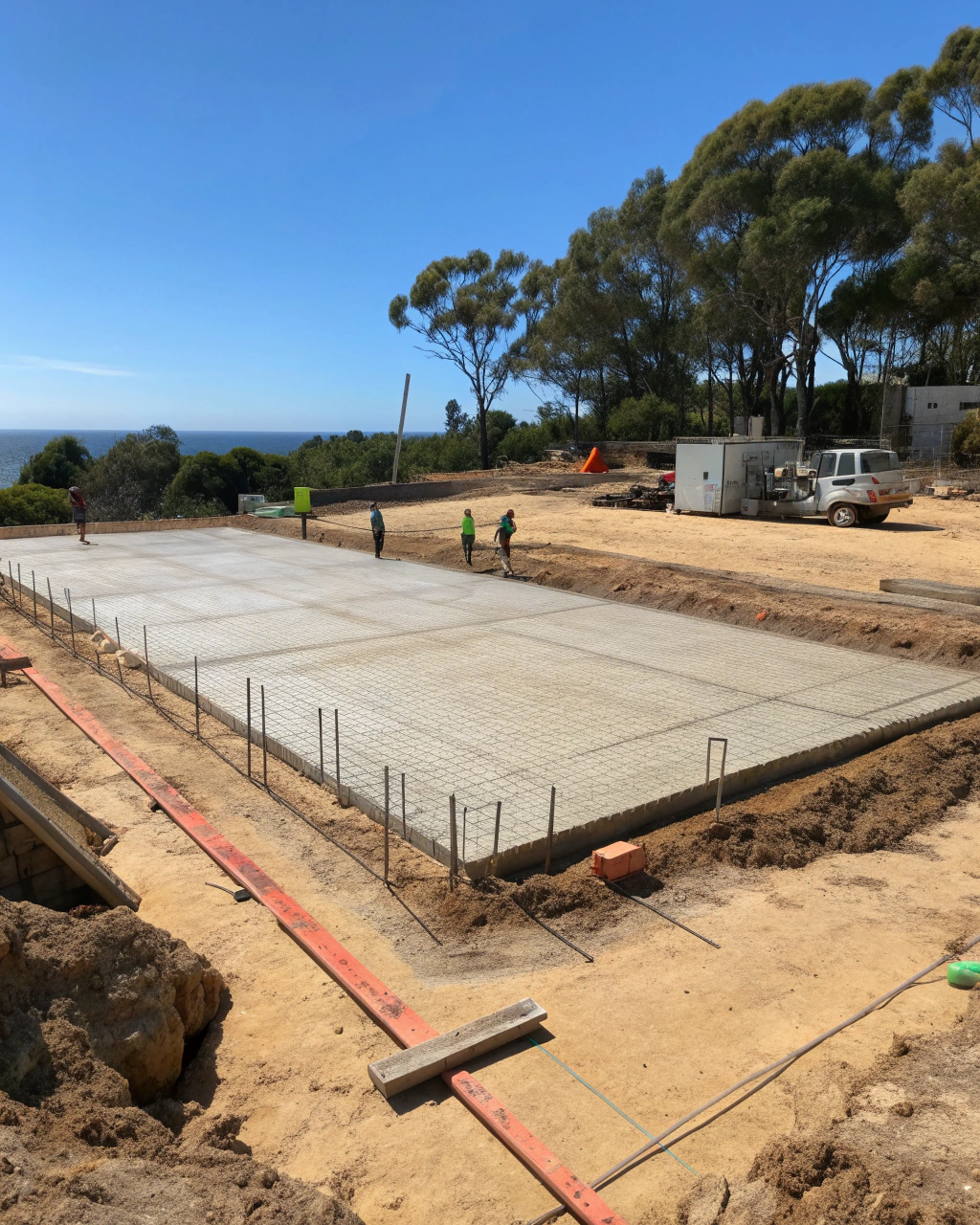
The Strip Footing Construction Sequence
Site Set-Out: Footing lines are set out using profiles and string lines referenced from surveyed site boundaries — accurate set-out determines wall positions, levels, and tie-ins to existing structures.
Trench Excavation & Formation Inspection: Trenches are excavated to the depth and width on the engineer’s drawings. Formation is inspected for bearing quality before reinforcement goes in — on reactive clay sites, this step matters.
Reinforcement Placement: Steel is placed according to the bar sizes, spacing, and cover specified in the structural documentation. The engineer’s specification is what gets built, without substitutions.
Hold Point Inspections: Most footing jobs include hold points where work cannot proceed until the engineer or building inspector signs off. We don’t pour until clearance is given.
Concrete Pour & Consolidation: Concrete is ordered to the specified strength and poured continuously where possible. Proper consolidation removes voids and meets the structural requirements of the design.
Curing & Protection: Freshly poured footings are protected from premature moisture loss — particularly important in Coffs Harbour’s summer heat. Correct curing directly affects long-term strength.
Where We Work Across the Coffs Harbour Region
A1 Concreters Coffs Harbour handles strip footing work across the full mid-north coast region — from the city itself out to the surrounding towns and communities.
Our service area includes Coffs Harbour, Sawtell, Woolgoolga, Toormina, Grafton, Bellingen, and Nambucca Heads — along with the suburbs and rural residential areas in between.
If your project is within the region and you have engineer documentation ready, we’re set up to quote and schedule your strip footing work without delay. Call us for a free quote or fill in the contact form, and we’ll get back to you promptly.
Frequently Asked Questions
A strip footing is a continuous reinforced concrete beam poured below ground along the line of a load-bearing wall. It spreads the wall’s load across a greater area of soil, making it the standard foundation system for brick veneer and double brick homes across the Coffs Harbour region.
Strip footings and slabs often work together — the strip footings form the perimeter and internal wall foundations, while the slab sits within them. Your engineer’s documentation will specify what your project needs based on the site classification and the structure being built.
That depends on your site classification. Reactive clay sites — which are common across Toormina, Boambee East, and parts of Sawtell — typically require deeper footings than more stable ground. Your engineer will specify the exact depth based on your block.
For most new builds, extensions, and secondary dwellings, yes — engineer documentation is required before we can price accurately. If you don’t have drawings yet, we can point you in the right direction.
We monitor conditions carefully before every pour. Coffs Harbour’s rainfall means excavated trenches can waterlog quickly, and we won’t pour onto a compromised formation. If conditions aren’t right, we reschedule — cutting corners at this stage affects the finished footing.
We order concrete to the strength specified in the engineer’s structural drawings — typically N20 or N25 for residential footings, though this varies by design. We don’t substitute or downgrade on strength.
Yes. Council-approved secondary dwelling designs across the Coffs Harbour region typically specify strip footings as the standard foundation system. We work directly from those approved plans.
Get a Free Quote for Strip Footings in Coffs Harbour
If you have engineer documentation ready and need a licensed concreter who knows how to execute correctly on a mid-north coast site, we’re ready to help.
A1 Concreters Coffs Harbour handles strip footing work across Coffs Harbour, Sawtell, Woolgoolga, Toormina, Grafton, Bellingen, Nambucca Heads, and surrounding areas.
Call us today for a free quote, or fill in the contact form and we’ll get back to you promptly.
