
How Thick Should a Garage Slab Be?
The right garage slab thickness depends on what you’re parking, how the space will be used, and what’s underneath. In Coffs Harbour, where clay-heavy soils and a humid subtropical climate add extra demands on any concrete pour, getting the specification right from the start is critical.
Use CaseRecommended Thickness
Standard single garage (cars, small SUVs) 100–125mm minimum
Double garage or heavier vehicles (4WDs, utes, trailers) 150mm recommended
Workshop or trade use (hoists, ramps, heavy equipment) 150–200mm
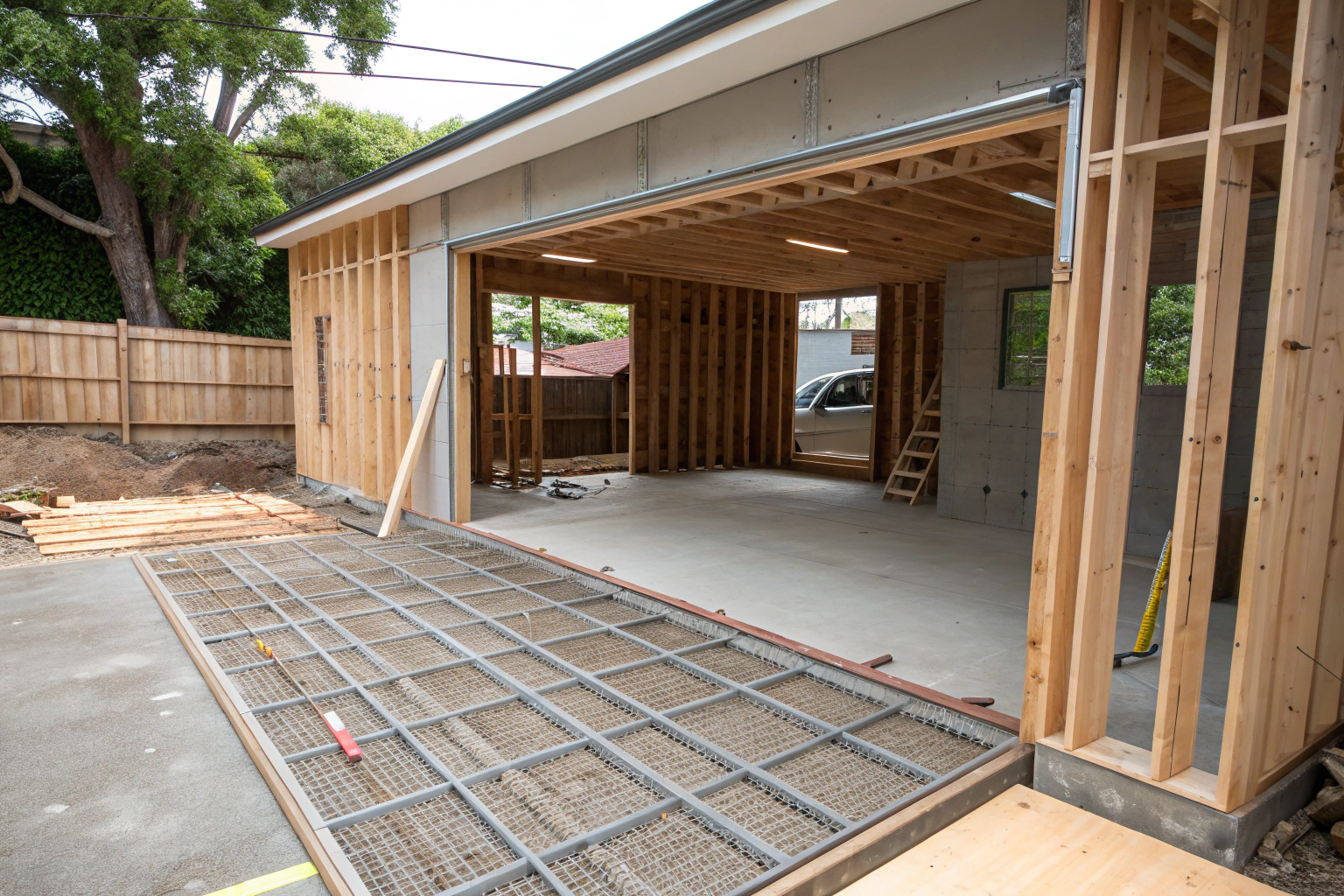
- Reinforcement: SL72 or SL82 steel mesh as standard; additional rebar at perimeter thickenings and internal post locations
- Sub-base: Minimum 100mm compacted road base — essential in Coffs Harbour, where reactive soils increase settlement risk
- Concrete strength: 25–32 MPa standard; 32 MPa recommended for coastal conditions
Every garage slab A1 Concreting Coffs Harbour pours is specified on-site — because the right thickness for your project depends on your soil, your vehicles, and your structure.


Garage Slab Thickness & Reinforcement — Getting the Specification Right
Site Preparation: What Happens Before the Concrete Arrives
A lot of homeowners are surprised by how much work goes into a garage slab before the concrete truck pulls up. The preparation phase is where the performance of the finished slab is really determined.
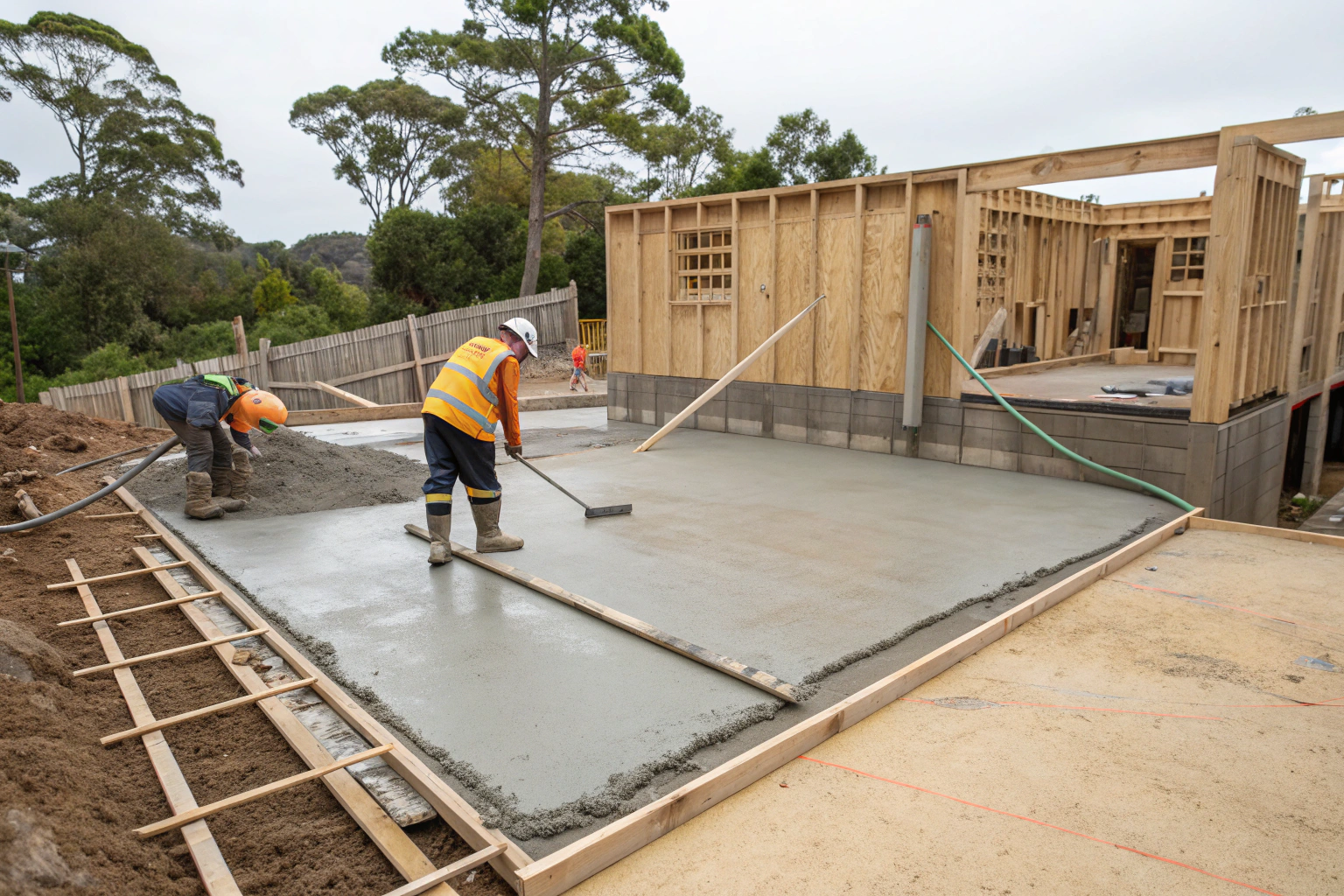
It starts with excavation, then the road base is brought in and compacted to a minimum 100mm depth across the full slab area. In Coffs Harbour, where reactive clay soils are common, consistent compaction across the full footprint is what prevents differential settlement — the uneven sinking that causes slabs to crack and tilt over time.
Once the sub-base is compacted and level-checked, formwork goes up, and reinforcement is placed at the correct height within the slab depth. Any services going into or under the slab — drainage lines, electrical conduits, plumbing penetrations — need to be in place before the pour. Once the concrete is down, that window is closed.
Types of Garage Slabs A1 Concreting Coffs Harbour Installs
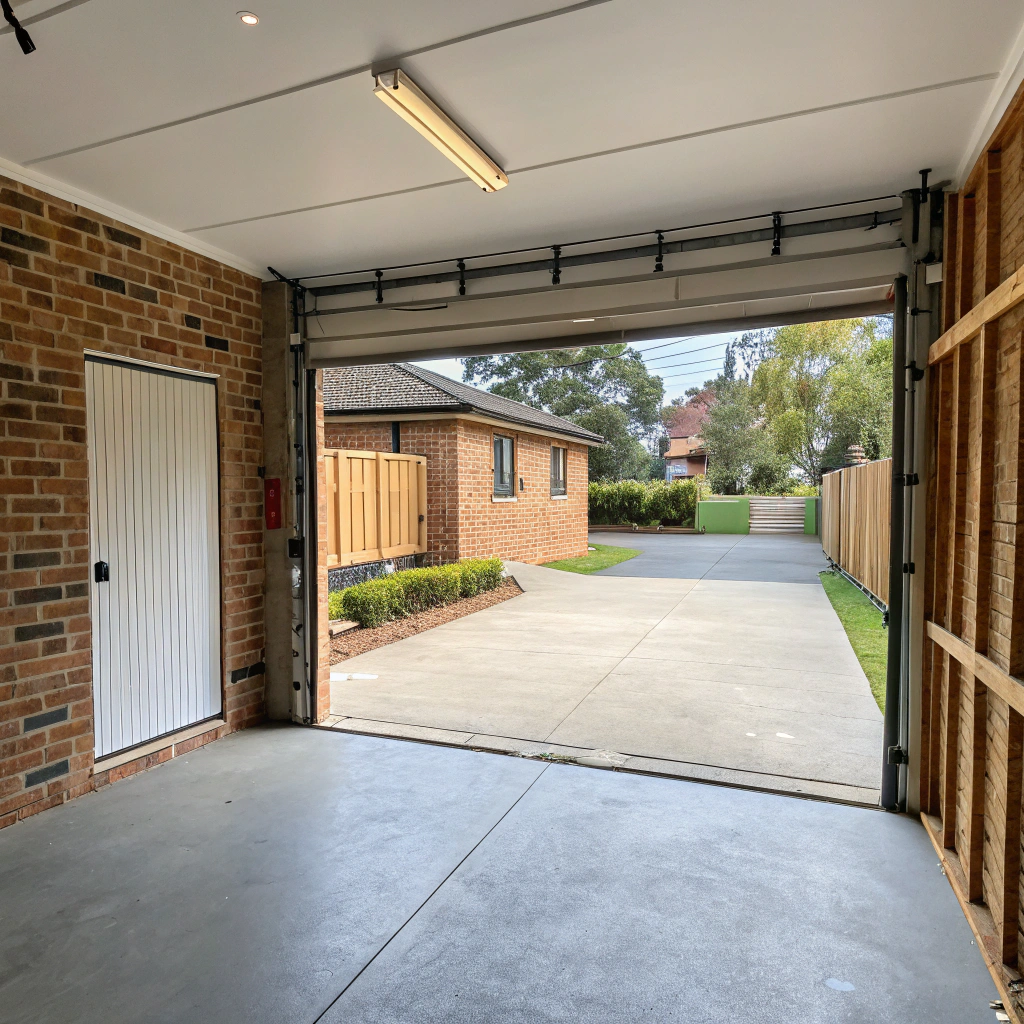
Standalone Garage Slabs: Slab formed and poured before the garage kit arrives on site. We handle single and double configurations, including sloping blocks needing additional cut-and-fill preparation.
New Home Construction Garage Slabs: Garage floor integrated with the overall house slab design from the outset, with coordination across the building designer, builder, and concrete contractor throughout the construction sequence.
Garage Addition Slabs for Existing Homes: Adding a garage to an existing property often involves excavation, possible retaining, and careful level matching against concrete and building elements already in place.
Workshop & Trade Garage Slabs: Heavier specification throughout — 150–200mm thickness, higher MPa mix, additional reinforcement at load points, and surface finish suited to oil, fluid, and heavy equipment use.
Surface Finish Options for Garage Slabs
The finish on a garage slab is a practical decision more than an aesthetic one. Three options suit most residential and workshop applications.
A steel-trowelled finish is the standard choice for most garages — smooth, dense, and easy to keep clean. A broom finish adds surface texture across the slab, giving better grip underfoot where people are regularly moving around parked vehicles. For homeowners planning to apply a decorative or protective floor coating after the concrete cures — epoxy systems being the most common — the surface needs to be finished differently from the outset, with preparation requirements that differ from a standard pour.
The right finish for your slab depends on how the space will be used day to day. It’s worth deciding before the pour, not after — because changing a finish once the concrete has set means grinding, not a quick fix.
Drainage & Falls — Protecting Your Garage Floor Long-Term
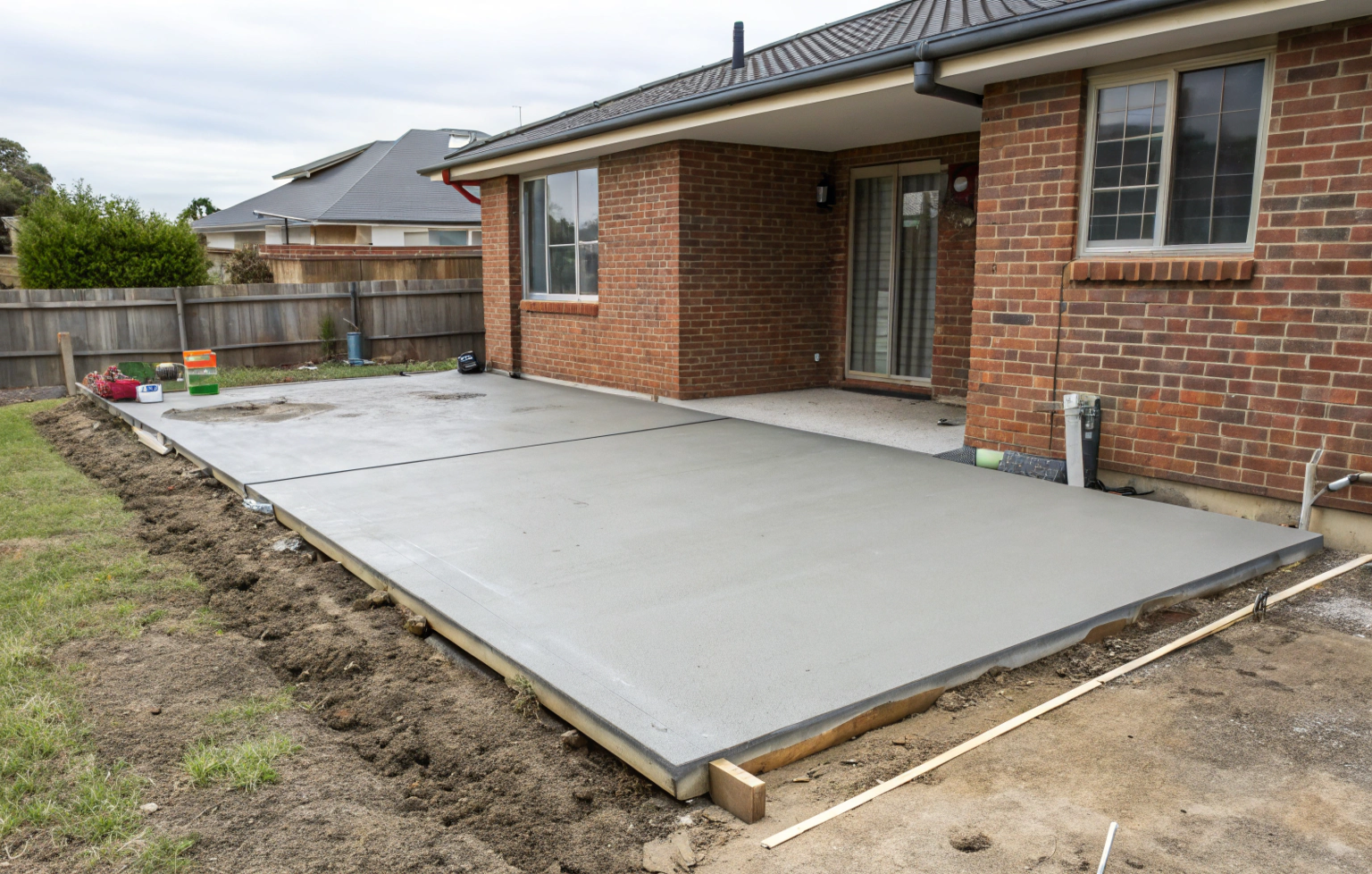
Drainage falls have to be designed into the slab before the pour. There is no correcting them after the concrete sets — the only option at that point is grinding, which removes surface density and creates its own problems.
The fall direction needs to move water toward the garage entry or a floor drain — never allowing it to pool under parked vehicles. Standing water under a car accelerates corrosion and creates a slip hazard every time someone steps out. Where wash-down or workshop use is planned, a floor drain cast into the slab is the right call from the start.
In Coffs Harbour, this isn’t an optional consideration. Subtropical summer downpours can dump significant rainfall in a short period, and a garage slab without adequate drainage will have water sitting on it regularly. Getting the falls right at the design stage costs nothing extra — getting them wrong costs considerably more to live with.
Garage Slab Compliance & Coordination With Your Building Structure
Coordinating With Your Builder & Building Designer
The slab needs to be designed around the specific structure going on top — garage kit dimensions, door opening locations, and wall framing anchor points. Engaging A1 Concreting Coffs Harbour early, ideally before the garage kit is ordered, avoids costly adjustments that come from a slab poured to the wrong dimensions or finished at the wrong level.
Damp Proof Course & Structural Integration
Attached garages require careful coordination of the damp proof course, slab height relative to internal floor levels, and wall base details. Errors at this stage don’t show up immediately — they show up as moisture ingress and structural movement years later, by which point rectification is a significant job.
Council Approval & Secondary Dwelling Considerations
Granny flat and secondary dwelling garage slabs carry additional compliance requirements — building approval, NCC compliance, and engineering documentation where required. A1 Concreting Coffs Harbour is experienced in working across the Coffs Harbour LGA on projects that involve these requirements, including secondary dwellings in Toormina, Sawtell, and Boambee East, where dual occupancy development has been active in recent years.
Frequently Asked Questions
Pricing depends on slab size, thickness, reinforcement requirements, and site conditions. We provide free on-site quotes so you get an accurate price based on your specific project — not a ballpark figure that changes once we see the site.
We recommend waiting a minimum of 7 days before light vehicle traffic and 28 days before regular use. Curing time can be affected by temperature and humidity, both of which vary across Coffs Harbour’s seasons.
It depends on the structure going on top and your property’s zoning. Standalone garages often require development approval or a complying development certificate. We recommend checking with Coffs Harbour City Council before work starts.
A garage slab is specified for heavier, repeated vehicle loads and requires a higher standard of surface finish, drainage falls, and structural integration. Shed slabs typically carry lighter loads and have fewer compliance requirements.
Yes. Sloping sites require additional cut-and-fill work and sometimes retaining walls before the slab can be formed. We assess the site first and factor all of that into the quote.
Reactive clay is common across much of Coffs Harbour’s residential land. We address it through proper sub-base preparation — minimum 100mm compacted road base — and correct slab thickness and reinforcement to manage movement over time.
Yes, and we’d recommend it for any garage used for washing vehicles or workshop activity. The drain needs to be planned and positioned before the pour — it can’t be added cleanly after the concrete is down.
Ready to Get Your Garage Slab Done Right?
Tell us about your project — new garage, home addition, workshop, or new build. We’ll come out, assess the site, and give you a straight quote based on what your specific slab actually needs.
Free on-site quotes for all garage slab projects across Coffs Harbour, Sawtell, Toormina, Boambee East, Moonee Beach, and Woolgoolga.
Call us today or fill in the quote form, and we’ll be in touch.
