
What Is Foundation Excavation?
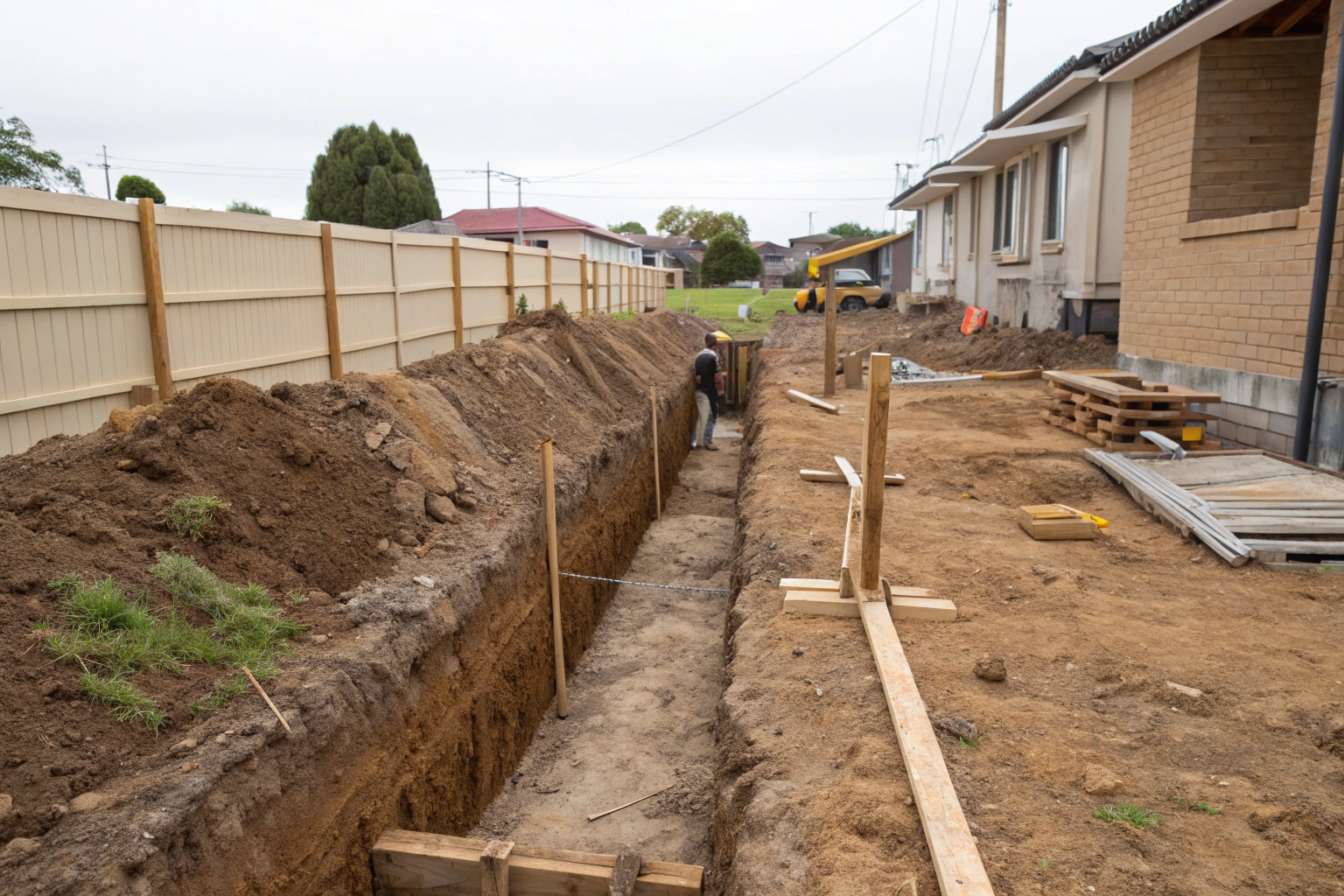
Foundation excavation is the precision earthmoving process of removing soil, rock, and debris to create a correctly dimensioned, structurally sound base for a building’s foundation. Unlike general earthmoving, foundation excavation requires exact depth and dimensional control — the exposed formation must match the bearing conditions assumed in the engineer’s design.
Key elements of foundation excavation include:
- Set-out accuracy — transferring foundation positions from approved drawings to the ground with precision
- Depth control — excavating to the engineer-specified founding level, not a nominal estimate
- Formation assessment — confirming exposed soil is consistent, undisturbed, and capable of supporting the design load
- Spoil management — removing excavated material promptly to maintain safe trench access
- Hold point compliance — meeting NSW inspection requirements before reinforcement and concrete are placed

The Foundation Excavation Services We Handle
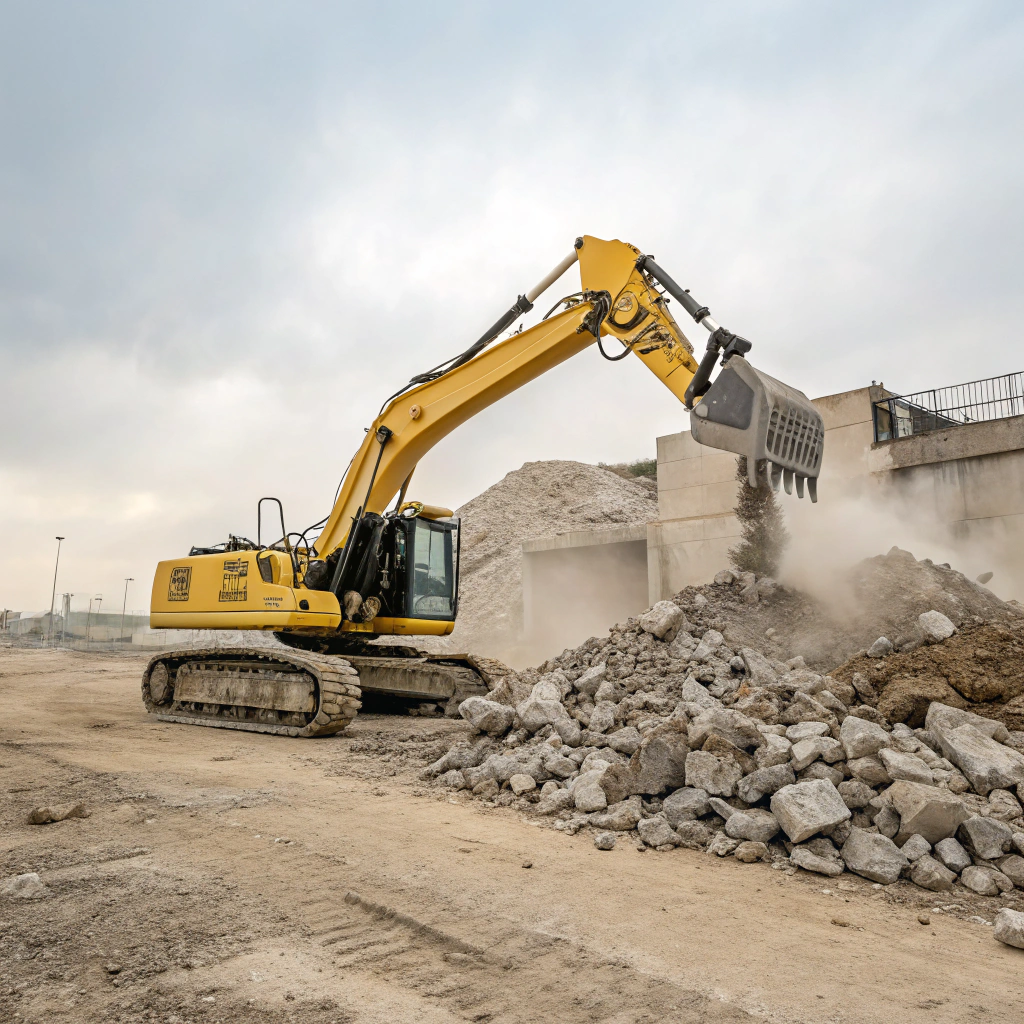
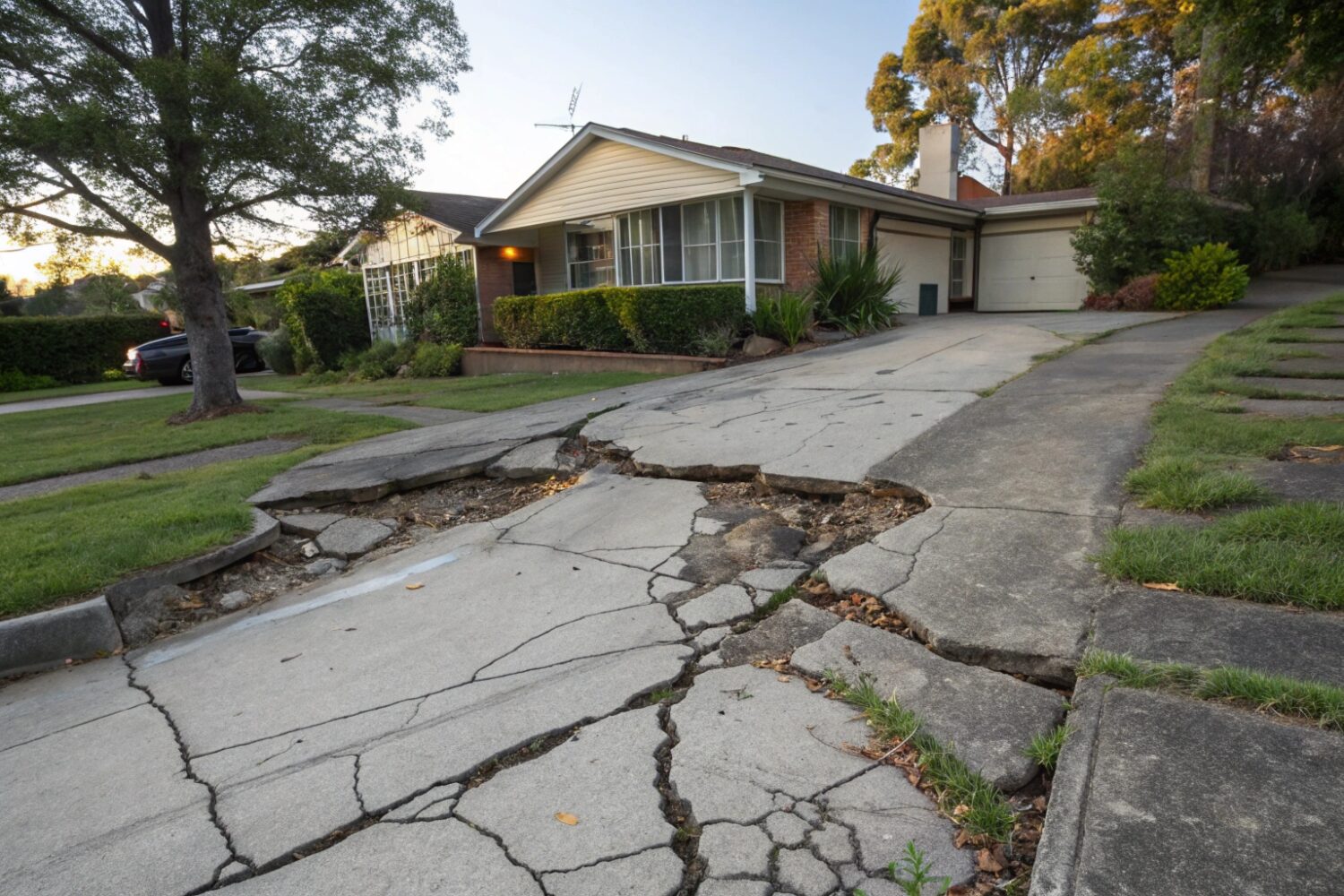
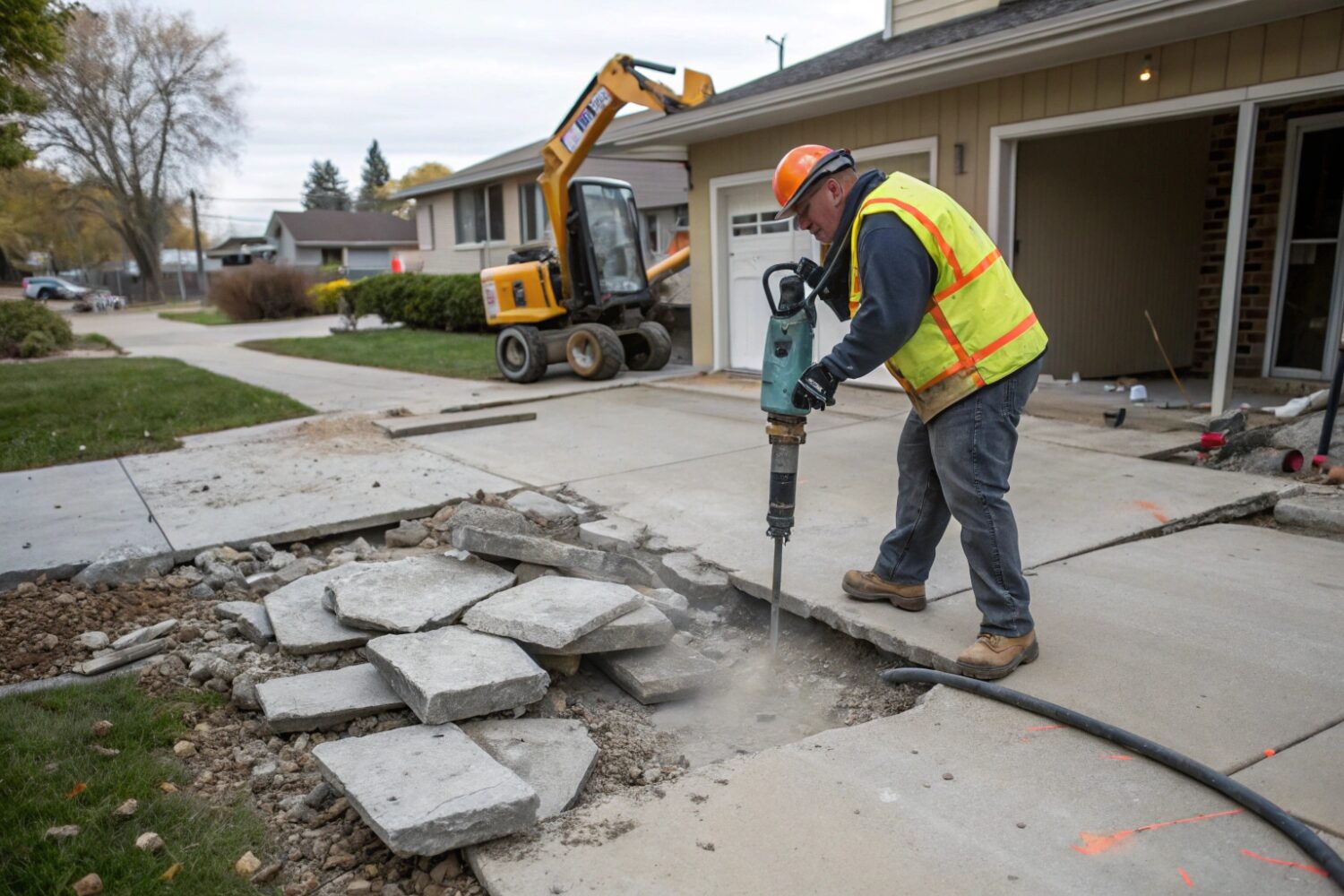
We handle the full range of foundation excavation types across residential, commercial, and civil projects — from single dwelling strip footings through to large-scale commercial pad and raft excavations.
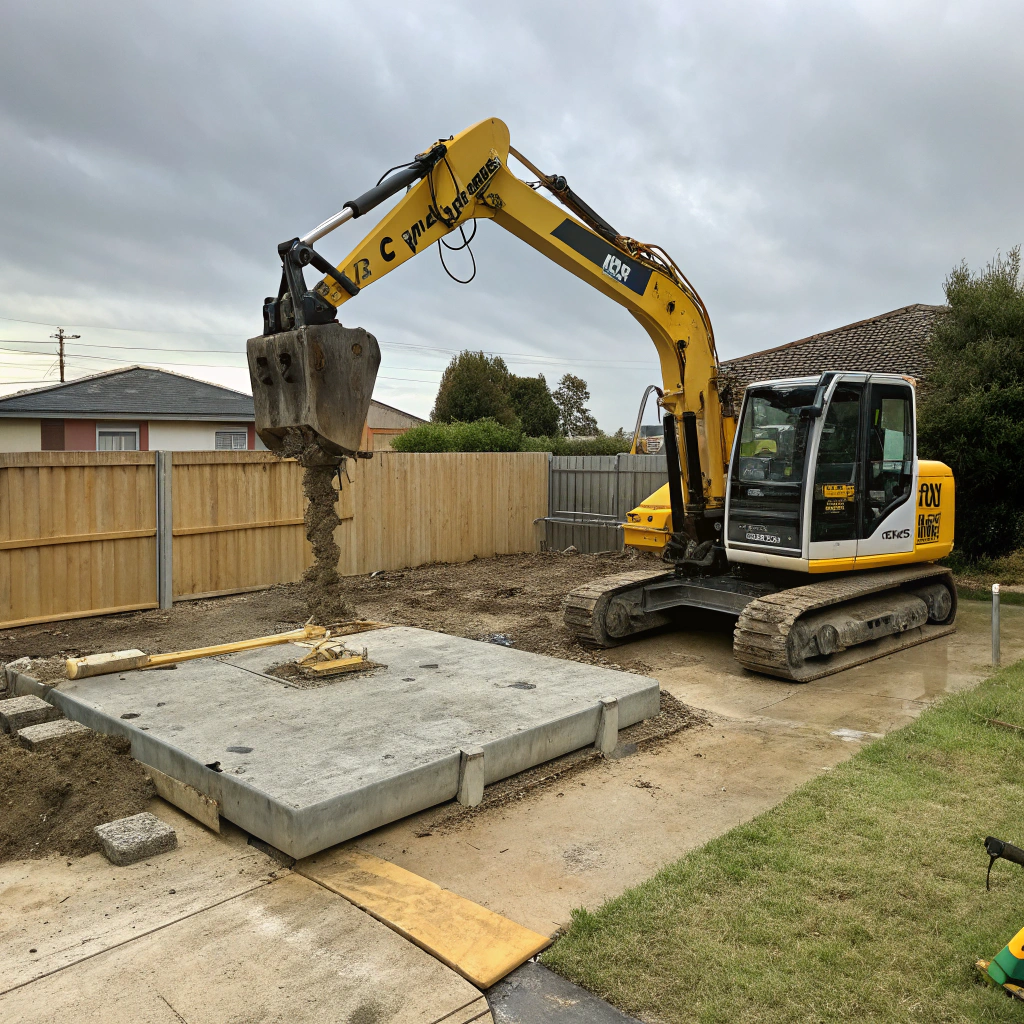
The Precision Requirements of Foundation Excavation Work
Foundation excavation is the most precision-dependent earthmoving operation on any construction project.
Set-Out Accuracy: Foundation positions are transferred from approved drawings to the ground before a single bucket of soil is moved. Errors at this stage can impact the dimensional accuracy of the entire building structure above.
Depth Control: We check consistently against the engineer’s specified founding level throughout the excavation — not excavate to a nominal depth and assume adequacy. Every trench and pad is brought to the correct level and confirmed before we proceed.
Formation Assessment: Before reinforcement is placed and concrete is poured, we check that the exposed soil at the base is consistent, undisturbed, and free from loose or waterlogged material. This step cannot be skipped.
Spoil Management: Excavated material is promptly removed from the excavation area. This maintains access safety and prevents surcharge loading on trench walls during the critical period between excavation and pour.
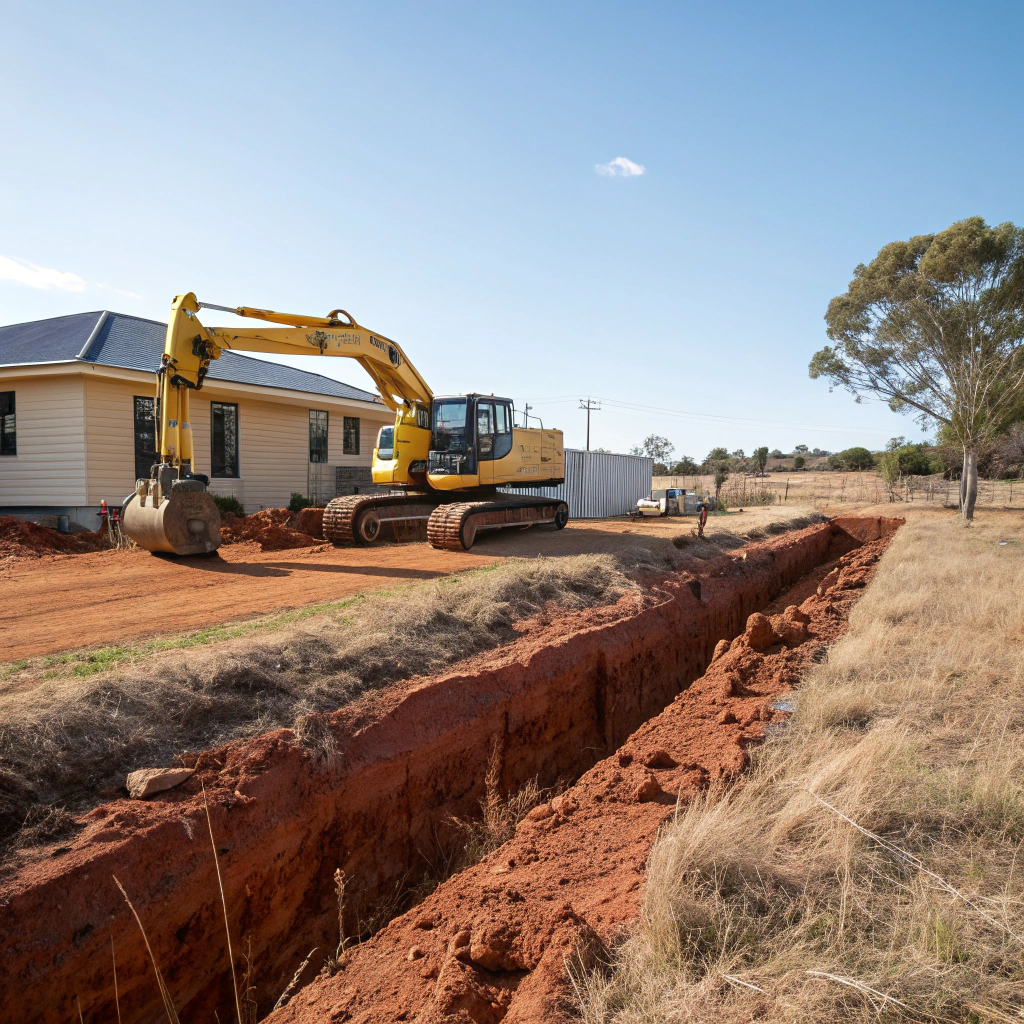
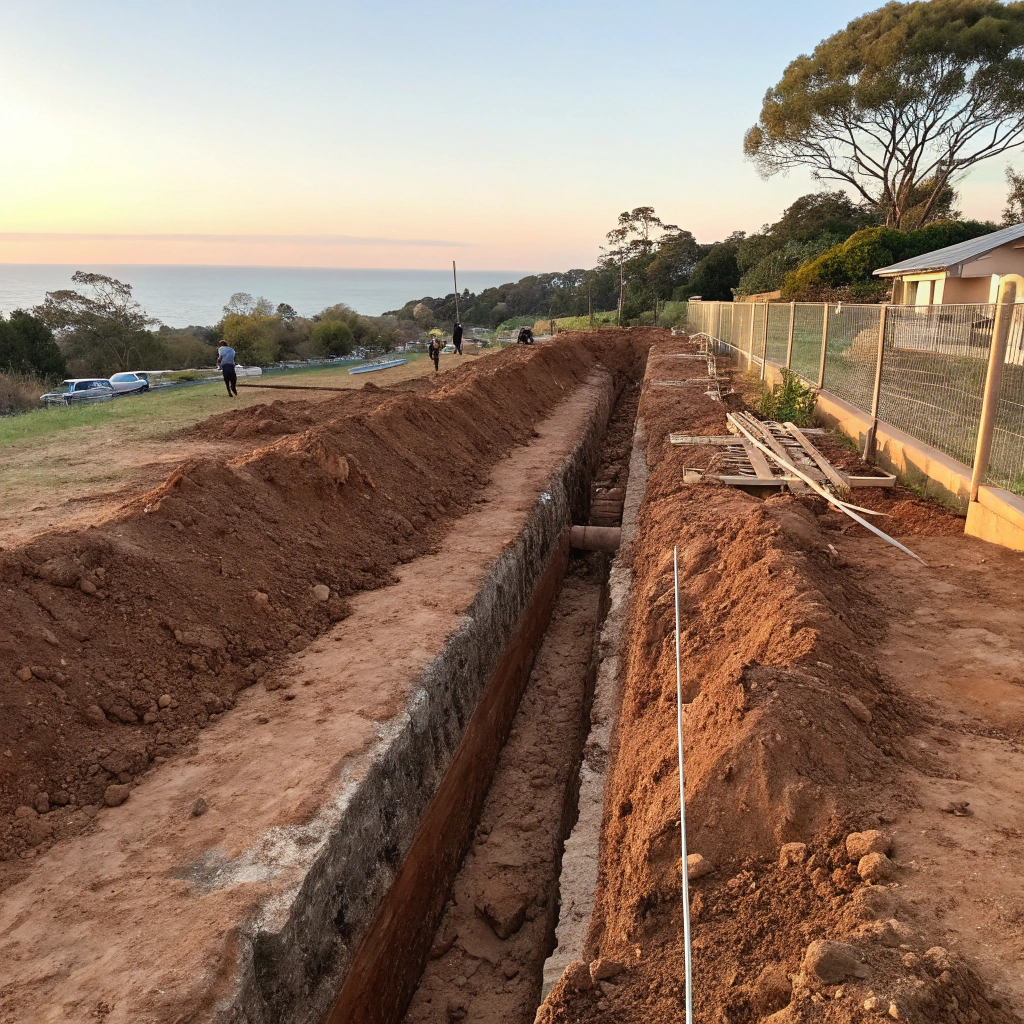
Managing the Excavation-to-Inspection-to-Pour Sequence in NSW
Getting the sequence right between excavation, inspection, and pour is as important as the excavation itself.
In NSW, a hold point applies to excavated foundation trenches and pads before reinforcement is placed and concrete is poured. The principal certifier must inspect and verify that the excavation dimensions and formation conditions comply with the approved engineering documentation before work can proceed.
Scheduling matters here. Excavation needs to be timed so that the inspection can be arranged and completed without sitting open longer than necessary — delays at this point hold up the entire building schedule.
We’re experienced in managing this sequence efficiently. We communicate early with certifiers, maintain accurate documentation, and aim to minimise the time between excavation completion and inspection clearance, ensuring your project stays on track.
Excavation Scheduling and Weather Management on the Mid North Coast
On the Mid North Coast, rainfall poses a significant risk to open foundation excavations.
The Coffs Harbour region’s subtropical climate means heavy rain events can arrive with little warning. Water ingress and formation disturbance in open trenches can compromise the bearing surface — and in some cases trigger re-excavation or formation remediation before the pour can proceed.
We’re based here, we work in these conditions regularly, and we know how to time foundation excavation around weather windows. When conditions are right, we move quickly. That local availability and responsiveness are what keep your program on track.
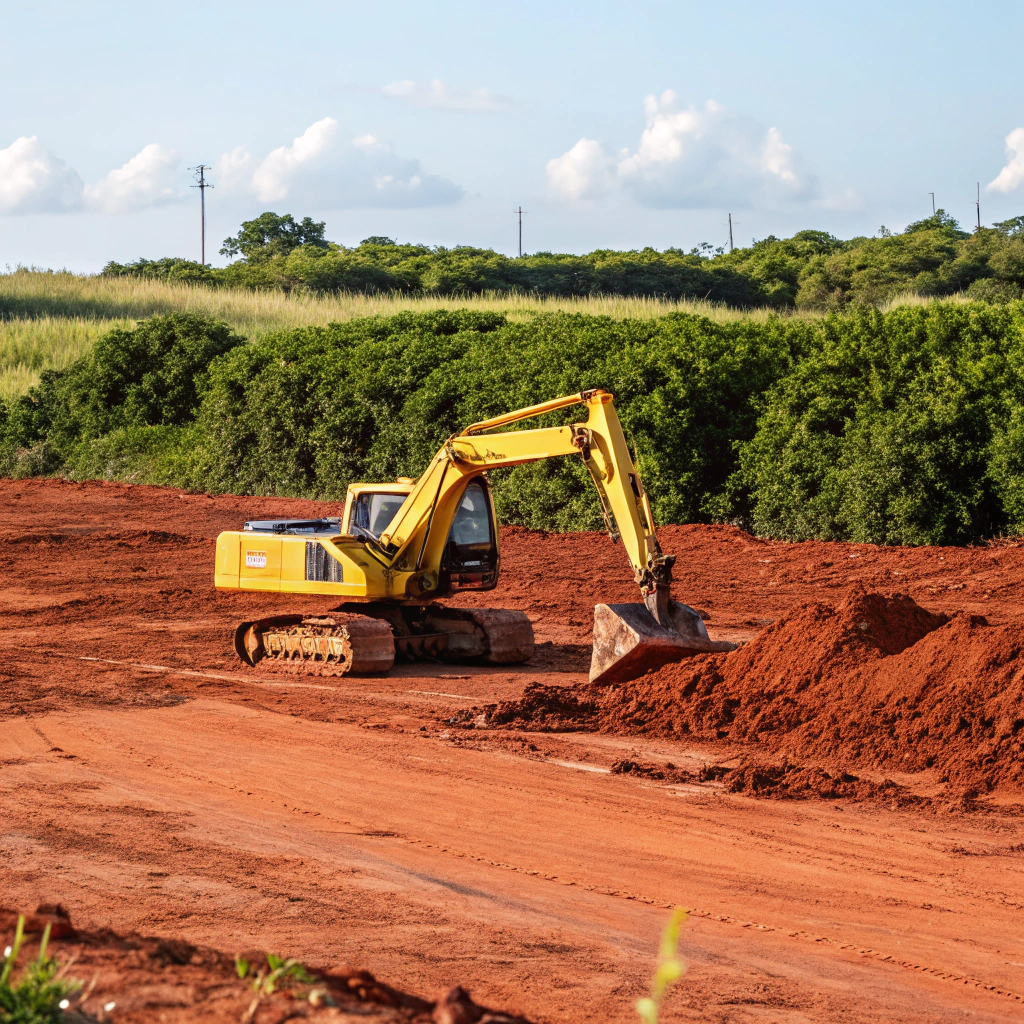
Local Ground Conditions That Affect Foundation Excavation in the Coffs Harbour Region
Ground conditions across the Coffs Harbour region are more variable than desktop assessments often suggest — and that variability has direct implications for foundation excavation.
Reactive coastal clays, extending from Toormina to Boambee East, can exhibit variations in depth and consistency across a single building footprint. The founding level in a soil report doesn’t always match what’s exposed when the trench is opened.
In hinterland areas around Bellingen and Nana Glen, shallow rock can appear well above anticipated depths — requiring a methodology change and an early conversation with the engineer.
Low-lying coastal sites around Moonee Beach and the Coffs Creek corridor pose a significant groundwater risk in open excavations, particularly after heavy rainfall.
We’re local. We know what these conditions look like when the ground opens up, we understand the implications for the foundation design, and we know when to stop and consult the engineer — and that protects your project.
Who We Work With on Foundation Excavation Projects
We work across a wide range of clients and project types — and we understand what each one needs from a foundation excavation contractor.
Homeowners undertaking new builds or major extensions need a contractor they can trust to get the groundwork right from the start. Owner-builders managing their own construction program need clear communication, reliable scheduling, and a team that understands the hold point requirements that sit between excavation and pour.
Builders and head contractors need a dependable subcontractor who shows up, works to the engineering documentation, and doesn’t create program problems. Commercial and industrial developers require excavation methodologies and outputs that match the scale and scheduling demands of larger projects.
Whatever your project type, we encourage early engagement once engineering documentation is available. The sooner we can assess the scope, methodology, and any site-specific ground condition challenges, the better positioned your project will be before work begins.
Frequently Asked Questions About Foundation Excavation in Coffs Harbour
It depends on the engineer’s design and the site classification. We excavate to the founding level specified in the approved engineering documentation — not a standard depth. Every site is different.
A hold point is a mandatory inspection stage in NSW where work cannot proceed until the principal certifier has inspected and cleared the excavation. We manage this process and coordinate with certifiers to ensure your program remains on track.
Reactive clays, shallow rock in hinterland areas, and groundwater on coastal sites all affect how we excavate and at what depth. We are familiar with these conditions and adjust our methodology accordingly.
Strip footings run along load-bearing wall lines as continuous trenches. Pad footings are discrete, isolated excavations for columns and posts. Both require precise positioning and depth control — they serve different structural purposes.
We stop, document what we’ve found, and contact the engineer before proceeding. Continuing to excavate through unexpected conditions without engineering input is a risk we won’t take on your project.
Yes. We remove excavated material from the work area as part of the job. Leaving spoil stockpiled alongside open trenches creates safety and surcharge risks we manage as standard practice.
Heavy rainfall can disturb the formation at the base of open trenches, which may require remediation before the pour proceeds. We schedule excavation to coincide with weather windows whenever possible and move quickly when conditions are favourable.
Get a Free On-Site Quote for Your Foundation Excavation
We don’t provide quotes for foundation excavation from a desk. We visit your site, assess the ground conditions, review your engineering documentation, and provide a quote based on what’s actually in front of us — not a generic estimate.
Here’s what happens when you call:
- We arrange a convenient time for a free on-site visit
- We assess ground conditions and review your engineering scope
- We provide a clear, accurate quote with no surprises
We service Coffs Harbour, Sawtell, Woolgoolga, Toormina, Bellingen, Grafton, and Nambucca Heads.
Call us today to get your foundation excavation scoped and scheduled.
