
Why Coffs Harbour Soil and Climate Change How Slabs Are Built
Not every concretor who quotes your job has poured slabs in this region before. That distinction matters more than most people realise when they’re comparing prices.
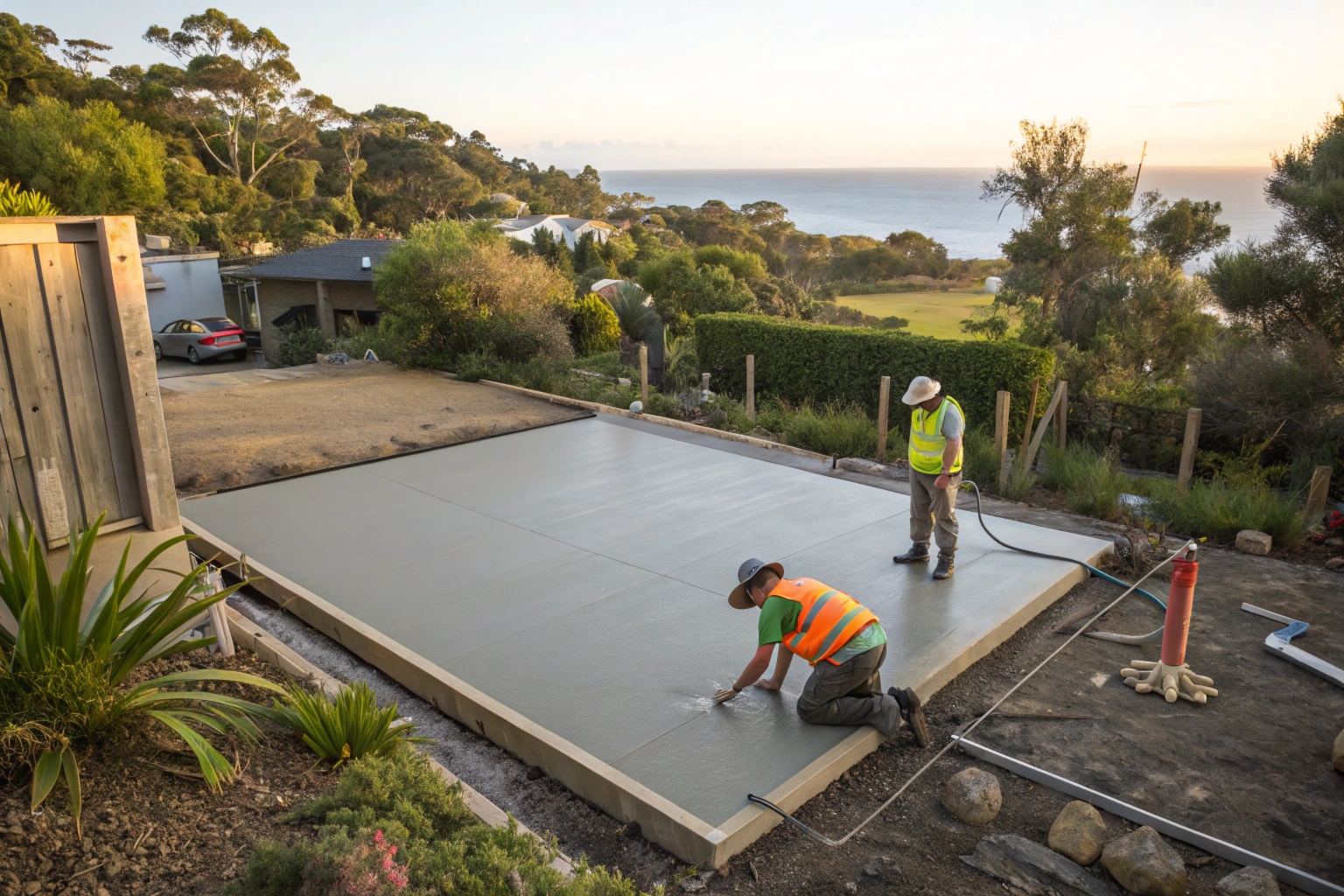
The Mid North Coast has some of the most variable ground conditions in coastal New South Wales. Reactive clay soils run through large portions of Coffs Harbour’s suburban areas — Toormina, Bonville, and parts of Boambee East included. These soils expand when wet and contract when dry, and that seasonal movement places real stress on slabs that aren’t designed and built to accommodate it. Engineer-designed slab systems with appropriate reinforcement and edge beam depths aren’t optional in these areas — they’re the difference between a slab that performs and one that moves.
Closer to the coast, sandy soils around Sawtell, Moonee Beach, and Sandy Beach behave completely differently. The drainage is better, but without proper sub-base compaction and preparation, you’re building on ground that can settle unevenly under load over time.
Then there’s the rainfall. Coffs Harbour averages among the highest annual rainfall of any regional city in NSW. Concrete placement needs to be scheduled around wet weather windows, and site drainage has to be set up correctly before a single barrow of concrete goes down.
We work from engineer-provided slab designs when the project requires it, and we’re across the standard residential specifications for straightforward projects. Either way, the local conditions are built into how we approach every pour.

What Actually Goes Into a Quality Concrete Slab
Most clients see the finished surface and assume the work starts when the concrete truck pulls up. The reality is that everything determining how your slab performs long-term happens before a single litre of concrete is poured.
The Preparation Work That Makes or Breaks a Slab
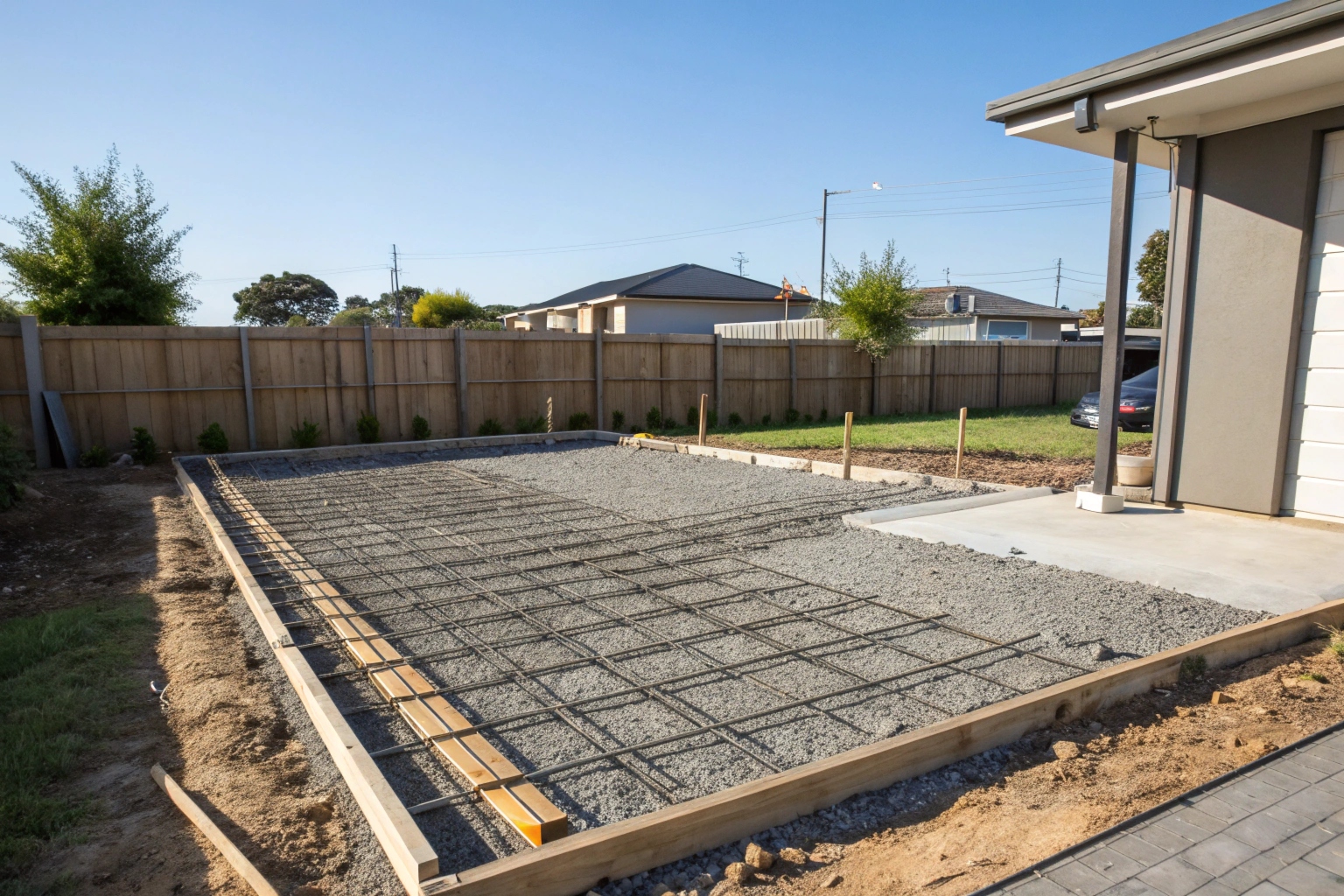
• Sub-base preparation and compaction — The ground underneath your slab needs to be stable, level, and properly compacted. Skipping compaction testing or rushing this stage is one of the most common reasons slabs settle unevenly after the job is done and the concretor is long gone.
• Reinforcement placement — Steel mesh or rebar positioned correctly within the slab thickness, not sitting on the ground where it adds almost no structural value. Correct placement and adequate concrete cover over the steel matters enormously for long-term performance.
• Vapour barriers — Required under floor slabs in contact with ground where moisture transmission into the building is a concern. Not every slab needs one, but when it does, it needs to be installed correctly and without tears or gaps.
• Pour and finishing sequence — Concrete placement, screeding, and finishing needs to be sequenced properly, particularly on larger pours where timing between sections affects the final surface quality.
Control Joints and Shrinkage Cracking
Concrete shrinks as it cures — that’s not a defect, it’s physics. Control joints placed at the right spacing and depth give the slab a predetermined location to relieve that shrinkage stress invisibly, rather than cracking randomly across the surface. Poorly placed or missing control joints are behind a significant portion of the cracking complaints clients have about slab work done by others.
Who We Work With on Concrete Slab Projects
The range of clients who need a concrete slab poured in Coffs Harbour is broader than most people assume. Our work covers all of them.
Homeowners
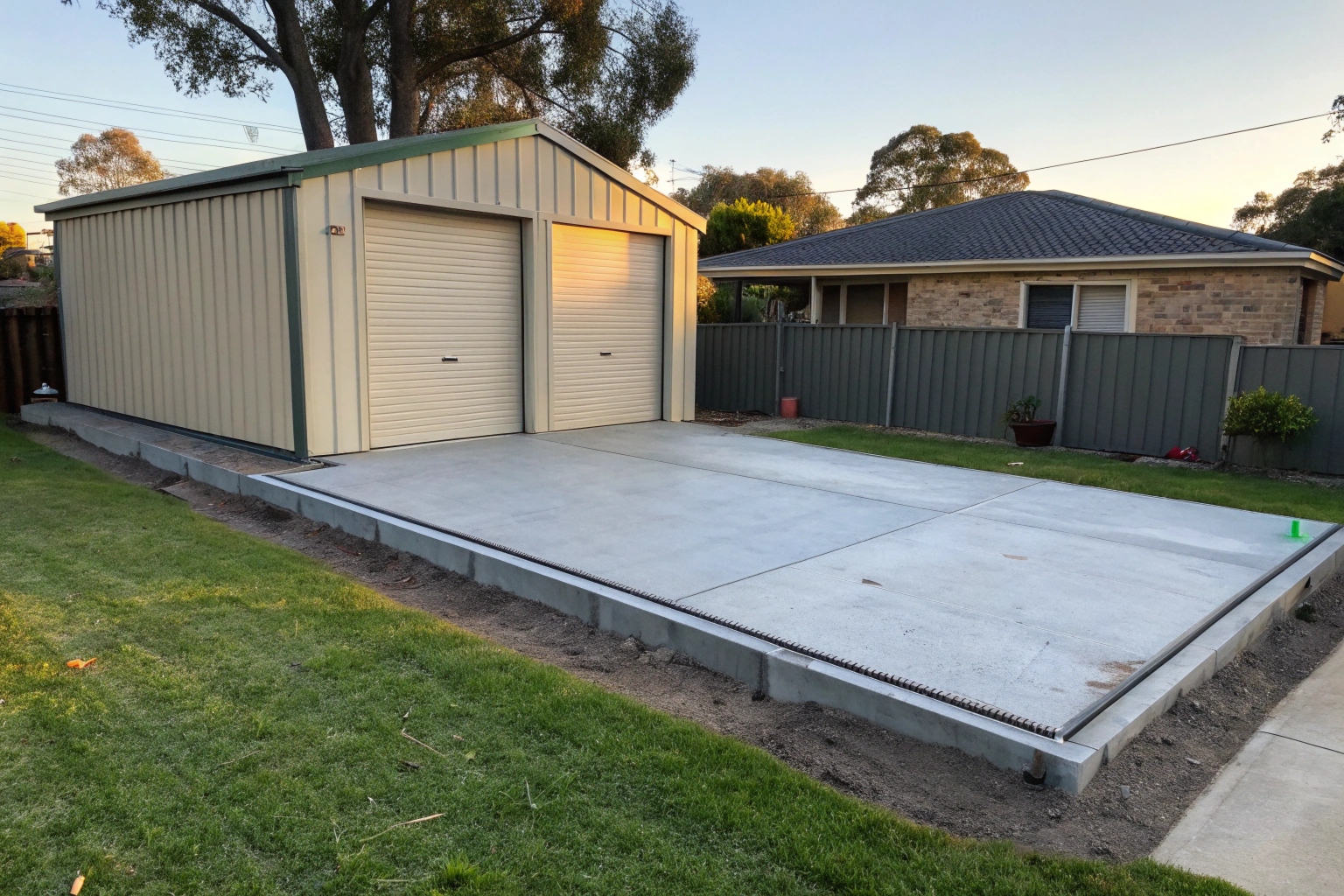
Most homeowners coming to us need a shed base, garage slab, or outdoor entertainment area poured on an existing residential property. The brief is usually straightforward — get it done properly, don’t leave a mess, and be upfront about what it’s going to cost. That’s exactly how we operate.
Owner-Builders
Owner-builders are often managing their first new home build and coordinating multiple trades simultaneously. We’re used to working within that context — meeting set-out requirements, working from engineer-provided drawings, and communicating clearly about what we need from the site before we arrive. Getting us involved before the design stage is finalised can save real headaches downstream, particularly around slab type selection and footing details that affect constructability.
Builders and Developers
For builders and developers with commercial or residential projects in the pipeline, consistency and reliability matter as much as price. We work to specification, show up when we say we will, and understand that delays on our end create a cascade of problems for the trades coming after us. That’s not something we take lightly on any project, regardless of size.
A Note on Early Engagement
The earlier we’re involved in a project, the more useful we can be. Questions about slab design, site access, material specifications, and scheduling are all easier to resolve before the concrete is ordered than after.
What to Expect When You Work With Us
A lot of the frustration people have with trades comes down to one thing — not knowing what’s happening or when. We try to take that off the table from the first conversation.
The Quote
We come out to site before quoting. There’s no way to give you an accurate number on a slab project without seeing the ground conditions, access, and scope in person. What you get back from us is a fixed-price quote that covers what was discussed — not a starting figure that grows once we’re on site.
Site Preparation
We handle sub-base preparation, formwork, reinforcement, and vapour barrier installation where required. If your project requires engineer certification or inspections at specific stages, we coordinate around those hold points without needing to be chased.
The Pour
Concrete placement and finishing is sequenced to suit the slab size, mix design, and weather conditions on the day. We don’t rush the finishing process to get off site faster, because surface quality issues caused by premature finishing are impossible to fix without grinding or resurfacing later.
After the Pour
Curing is not optional. Freshly poured concrete needs to be protected from rapid moisture loss, particularly during the warm and windy conditions Coffs Harbour delivers regularly through summer. We advise on curing requirements and make sure the slab is left in the right condition before we pack up.
Control Joints
Cut at the right time and to the right depth — not skipped because it adds a step to the job.
Concrete Slab Work Across Coffs Harbour and Surrounding Areas
We’re based on the Mid North Coast and we pour slabs across the full region — not just within the Coffs Harbour city limits.
Coffs Harbour and Immediate Surrounds
Toormina, Boambee East, Sawtell, Moonee Beach, Sandy Beach, and Korora make up the core of our residential work. These are the suburbs where we’re most familiar with the ground conditions, council requirements, and the access challenges that come with established residential streets and newer estate developments alike.
North and South Along the Pacific Highway Corridor
Woolgoolga and Grafton to the north, Nambucca Heads and Macksville heading south. Project size and scope determine how far we travel, but regular commercial and residential work takes us through these areas consistently.
Hinterland Areas
Bellingen and the Bellinger Valley come up regularly for rural residential and shed slab work. Access and site conditions out this way can be more challenging than suburban pours, and we factor that into how we quote and schedule.
Why Local Experience Matters Here
A concretor who hasn’t worked this region before is going to learn its soil conditions and rainfall patterns on your job. That’s not a position you want to be in on a slab project where the prep work determines everything that follows. We’ve been pouring slabs in these conditions long enough that the variables specific to this stretch of coast aren’t surprises to us — they’re just part of the job.
Concrete Slab Questions We Get Asked Around Coffs Harbour
Not always. Straightforward shed and garage slabs on stable ground can typically be built to standard residential specifications. New home floor slabs and anything going on reactive clay soils will generally need an engineer-designed slab system. We can advise based on your specific site and project type.
Most residential shed and garage slabs are poured and finished in a single day. Larger commercial floors or new home slabs may require staged pours depending on size and specification. Site preparation in the days before the pour is usually where the bulk of the time goes.
Concrete reaches adequate strength for most construction activity within seven days under normal curing conditions. Full design strength is typically reached at twenty-eight days. We’ll give you a clear timeline based on your specific project and mix design.
Usually comes down to one of three things — inadequate sub-base preparation, missing or poorly placed control joints, or insufficient reinforcement. Sometimes all three. Cracking is common but it’s not inevitable when the prep work is done properly.
That’s between you and your certifier or council, but we’re used to working within those processes and can provide whatever documentation is needed from our end.
Yes. Colour and texture matching on extensions is never perfect — existing concrete weathers and changes over time — but we get as close as the materials allow.
Absolutely. We work from engineer drawings, meet hold point inspections, and communicate clearly throughout — which is exactly what owner-builders need from their concretor.
Get a Quote on Your Concrete Slab in Coffs Harbour
Whether you’re a homeowner planning a shed base, an owner-builder getting ready for a new home slab, or a builder with a commercial floor in the pipeline — the next step is the same. Get us out to site, let us look at what you’re working with, and we’ll give you a fixed-price quote that reflects the actual job.
We service Coffs Harbour and the full surrounding region including Sawtell, Woolgoolga, Toormina, Grafton, Bellingen, and Nambucca Heads. No matter where you are across the Mid North Coast, if you’re within our service area and you’ve got a slab that needs pouring, we want to hear from you.
A couple of things worth knowing before you call:
• We quote in person — there’s no accurate way to price a slab job without seeing the site
• Fixed-price quotes — what we quote is what you pay, no variations added after the fact
• We’re locally based — we know the soil conditions, the rainfall patterns, and the council requirements across this region because we work in it every day
• Early engagement saves money — if your project is still in the planning stage, getting us involved before the design is finalised can improve the outcome and avoid costly specification problems later
Call us today or fill in the contact form to arrange a site visit. The sooner we can look at your project, the sooner we can give you a number you can actually plan around.
