
Transform Your Driveway with Coloured Concrete in Coffs Harbour
A cracked front path is something a lot of Coffs Harbour homeowners have been walking past for years, telling themselves they’ll get it sorted eventually. Then a visiting relative catches their foot on a lifted edge, or the agent mentions it before an appraisal, and suddenly it moves to the top of the list. We’ve seen it on properties across Toormina, Sawtell, and Woolgoolga more times than we can count.
A well-built concrete footpath does more than connect one part of a property to another — it contributes to safety, accessibility, and the overall presentation of the place. Whether it’s a residential entry walkway, a side access path, or a commercial pedestrian thoroughfare needing to meet Australian Standards, we’ve got the experience and local knowledge to deliver it properly. We service Coffs Harbour and the surrounding region, from Urunga to Woolgoolga.
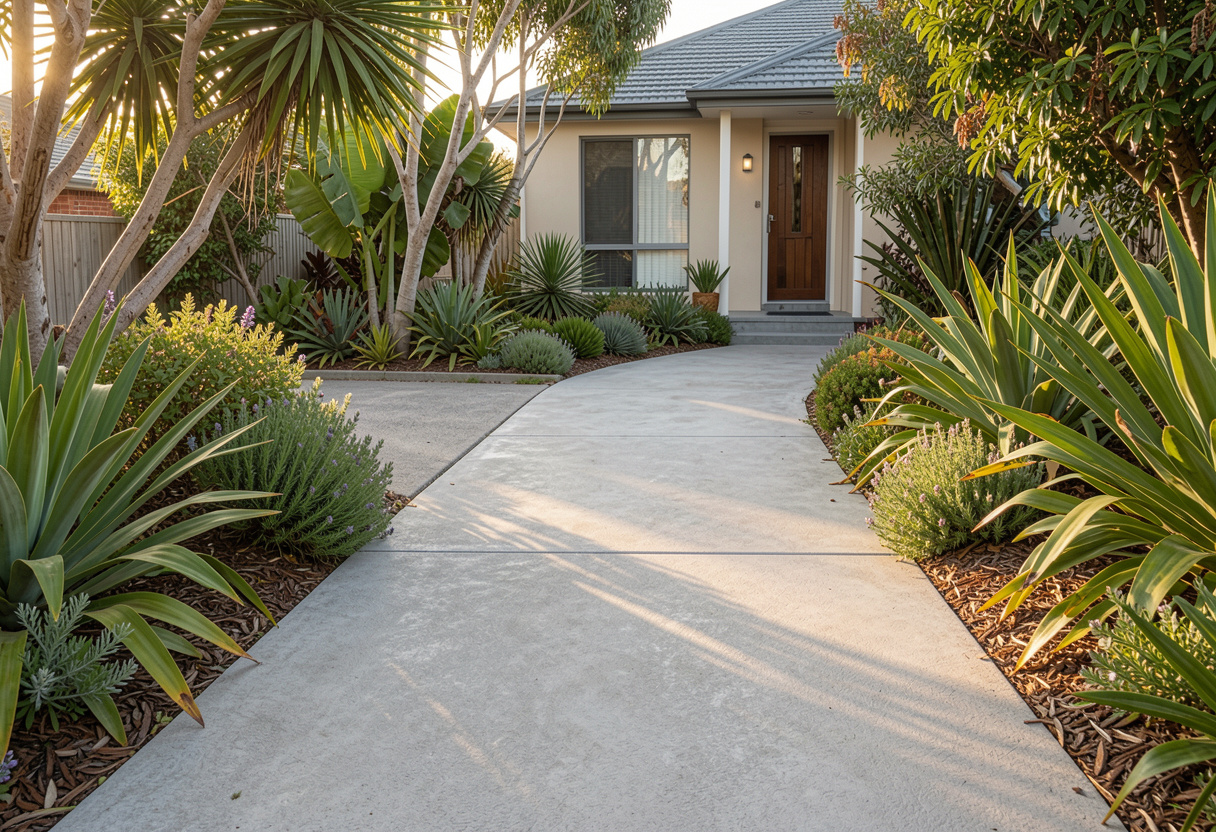

Concrete Footpath Services We Deliver Across Coffs Harbour


Footpath Finish Options
Plain broom-finished concrete is the standard choice for most residential and commercial footpath projects. The broom texture provides slip resistance underfoot in wet conditions — an important consideration in a high-rainfall region like Coffs Harbour.
Exposed aggregate is available for paths that form part of a broader decorative outdoor scheme, and coloured concrete can be specified where the path needs to complement surrounding landscaping or hardscaping. For most footpath jobs, finish is a secondary decision to getting the construction fundamentals right.
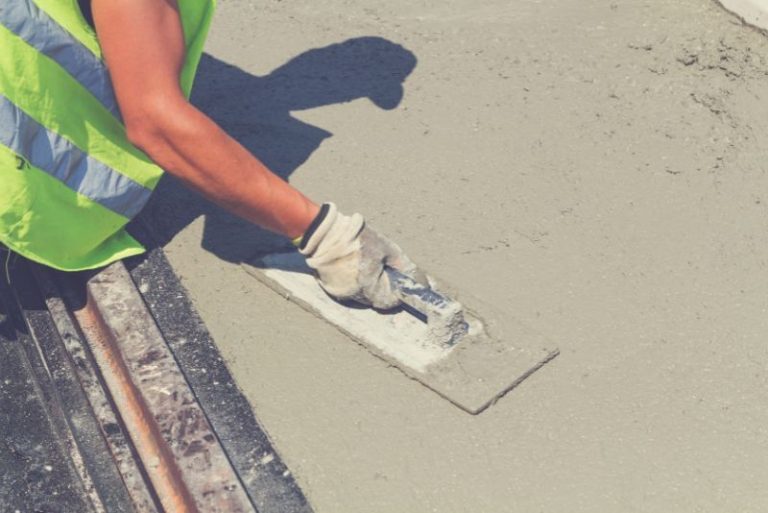
Get a Free Quote on Your Coffs Harbour Footpath Project
Footpath work varies significantly in scope — a ten-metre residential entry path and a commercial pedestrian network are entirely different jobs, and the only way to price either accurately is with an on-site look.
We offer free quotes for both residential and commercial enquiries across Coffs Harbour, Sawtell, Woolgoolga, Toormina, Urunga, and Bellingen. Contact us today to arrange a site assessment and get your footpath project scoped properly.
FAQs About Concrete Footpaths in Coffs Harbour
How long does a concrete footpath take to install?
Most residential footpath jobs in Coffs Harbour are completed in a single day — a standard entry path or side access run is straightforward once the ground is prepared. Larger commercial jobs or multi-section backyard paths may run over two days depending on the total area and access. Concrete needs a minimum curing period before it’s ready for foot traffic, typically around 24 to 48 hours. I always factor the local weather forecast into scheduling, because pouring during a heavy rain event isn’t something we do here on the mid-north coast.
Does the wet Coffs Harbour climate affect how soon I can use my new path?
It does play a role — high humidity actually slows the evaporation process during curing, which can work in the concrete’s favour by reducing surface cracking. That said, direct heavy rainfall in the first 24 hours can damage a freshly finished surface before it’s set, so timing matters. I keep a close eye on the Bureau of Meteorology forecast before any pour. Most jobs through summer are scheduled around the afternoon storm pattern to avoid problems.
Do I need council approval for a footpath on my residential property?
For paths entirely within your own property boundary — a garden path, entry walkway, or backyard run — council approval generally isn’t required in Coffs Harbour. Where it gets more involved is if your path connects to or runs adjacent to council-owned footpaths on the nature strip or road verge. Commercial projects and body corporate shared paths often have their own compliance requirements. I can let you know at the quote stage whether your specific job is likely to need any approvals.
How thick should a residential concrete footpath be?
For a standard residential footpath taking foot traffic only, 100mm is the typical thickness and what I’d recommend for most jobs across Coffs Harbour. If the path runs alongside a driveway and vehicles are likely to mount it, I’d increase that to 125mm with appropriate reinforcement. Sub-base preparation matters just as much as thickness — a well-compacted base is what keeps the path level over time, particularly in areas with clay-heavy or sandy soils like those found in parts of Toormina and Moonee Beach. Getting the base right from the start is what separates a path that lasts from one that shifts and cracks within a few years.
Can you match the finish on my new path to my existing concrete?
I can get very close in most cases, but an exact match is difficult on older concrete that has weathered and changed colour over time. If you’re extending an existing path, I’ll assess the current finish and use the closest available mix and texture to keep the result looking consistent. For properties where appearance is a priority — like a front entry in Sawtell or a beachside property in Woolgoolga — a decorative finish across the whole path is often a better outcome than trying to blend new work with a 20-year-old slab.
What's the difference between a concrete footpath and a concrete pathway — are they the same thing?
In practical terms, yes — both refer to a defined, hard-surfaced pedestrian route, and I use the terms interchangeably depending on the context. In a council or civil construction context, “footpath” tends to refer specifically to the pedestrian infrastructure alongside a road, while “pathway” is more commonly used for garden routes and private connections within a property. Either way, the construction process, material standards, and finish options are the same. What changes is whether the job involves council standards and compliance requirements or is a straightforward residential installation.
