Why Coffs Harbour Properties Need Concrete Demolition
Concrete demolition isn’t something people plan for years in advance. Most of the time, it comes up because something’s worn out, a renovation’s getting underway, or a project simply can’t move forward until the old concrete’s out of the way.
Across Coffs Harbour, the most common scenario we see is older residential properties — a lot of homes here were built in the ’80s and ’90s, and those original driveways, paths, and backyard slabs have done a couple of decades of heavy lifting through subtropical heat, monsoonal rain, and tree roots that don’t ask permission before they start moving concrete. When a driveway’s cracked and sunken past the point of repair, full removal is the only practical path forward before a replacement can go down.
Renovation and extension projects are the other big driver. If you’re extending the house, adding an alfresco, or reconfiguring the backyard, there’s almost always existing concrete in the way that needs to come out first. Development and commercial sites are similar — existing structures, old hardstand areas, and deteriorated floor slabs need to be cleared before new building work can begin.
One thing worth knowing: we handle both the demolition and the replacement concrete work. So if you’re pulling out an old driveway and putting a new one down, or demolishing a slab to make room for a new outdoor entertaining area, you’re dealing with the same contractor start to finish. That means less coordination on your end, and a team that already knows exactly what your site looks like by the time the new concrete goes in.

The Equipment and Method Behind a Concrete Demolition Job
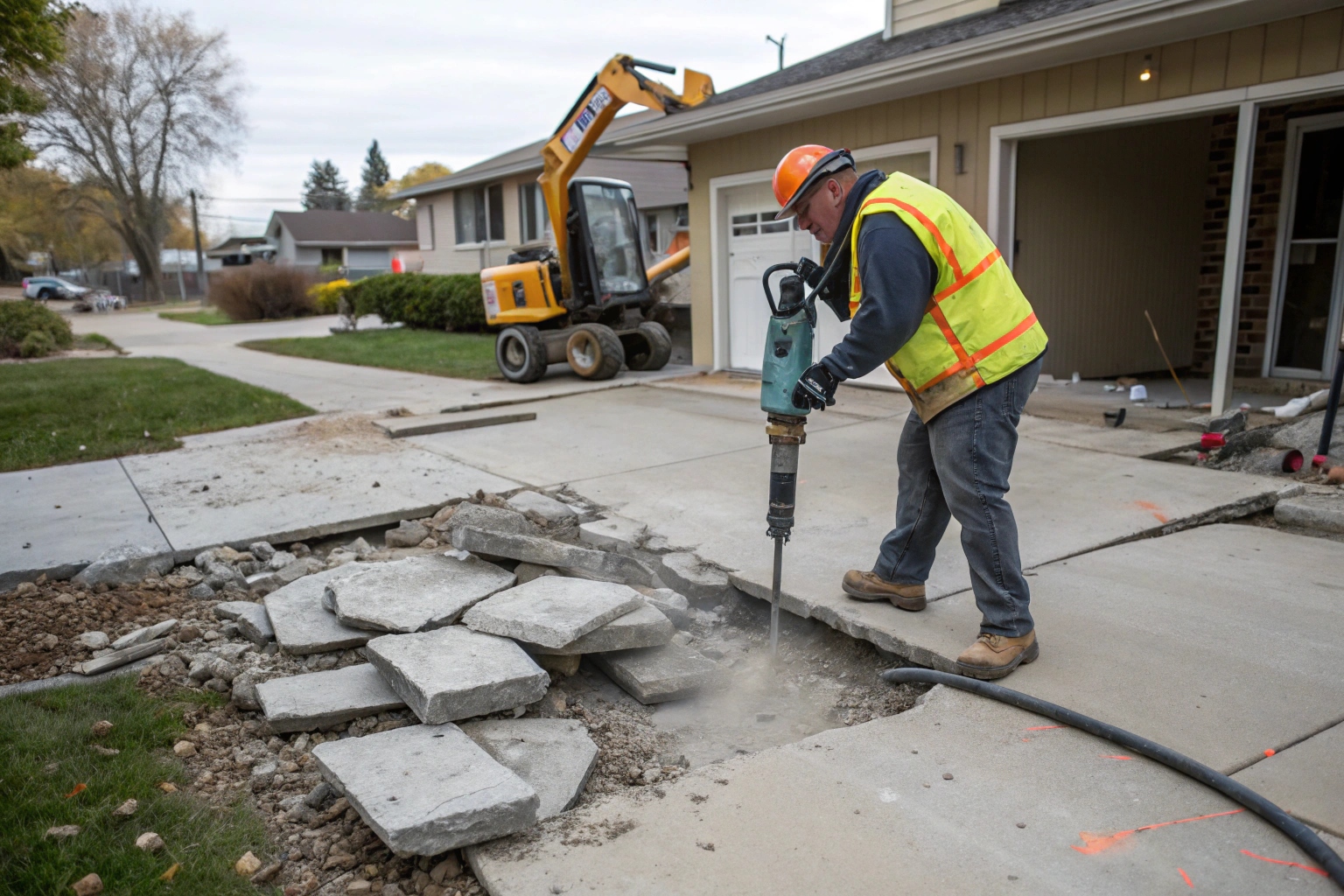
A lot of people picture concrete demolition as one guy with a jackhammer going at it until the slab’s in pieces. The reality on a properly run job site looks quite different — and the difference matters, both for the quality of the result and for the impact on everyone around the site.
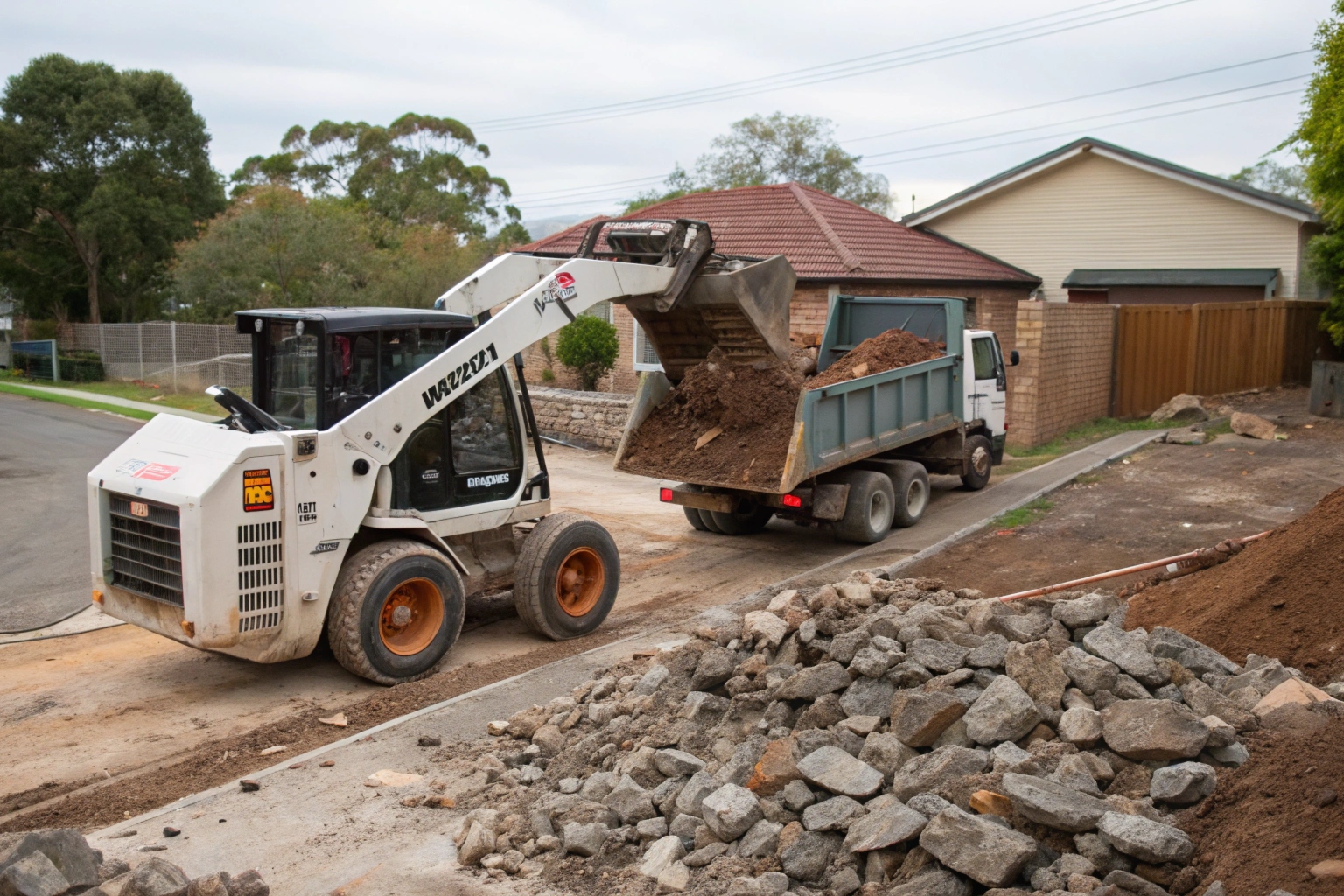
The combination of equipment we bring depends on what the job actually involves. Hydraulic breakers and jackhammers are used for breaking slabs and structures into manageable pieces. Concrete saws handle the clean cut lines at demolition boundaries where only part of a slab is coming out. Bobcats and excavators are brought in for thicker slabs and for loading broken material efficiently once it’s been broken up. Tipper trucks handle the removal and disposal of rubble off site. No single piece of equipment does everything — a residential driveway and a commercial warehouse floor are different jobs that need different tools, and using the wrong approach for the concrete type or thickness slows the job down and increases the risk of damage to surrounding areas.
Dust and Noise Management
Concrete demolition is loud and it kicks up a significant amount of dust. On residential jobs in established suburbs — Toormina, Boambee East, Sawtell, and similar areas where houses sit close together — that directly affects your neighbours. We manage dust suppression and noise actively on site rather than treating it as someone else’s problem to deal with. It’s a basic part of running a professional job, and it’s one of those things that separates a well-managed demolition from the kind that gets complaints before lunch.
Demolition Is the First Step — We Handle What Comes Next Too
Most people who call us about concrete demolition aren’t just trying to get rid of old concrete for the sake of it. They’ve got something planned. A new driveway. A renovated outdoor entertaining area. A building extension. A fresh slab where a tired old one used to be. The demolition is the first step in a bigger project, and who you choose for that first step has a direct impact on how smoothly everything after it goes.
When the same contractor handles both the demolition and the replacement concrete work, something important happens — there’s no gap between what the demolition crew knew about the site and what the concretor needs to know before they start. We’ve already seen the sub-base. We know what came out, what the ground conditions are underneath, and what preparation is needed before new concrete goes down. That knowledge doesn’t have to be communicated between two separate businesses with two separate quotes and two separate site visits. It’s just there, because we were there for both parts of the job.
That continuity matters more than people often realise going in. Miscommunication between a demolition contractor and a separate concreter is one of the more common reasons renovation projects run into avoidable problems — scope gaps, sub-base issues that weren’t flagged, preparation steps that each party assumed the other was handling. When one contractor owns the whole process from removal through to the finished slab, those gaps close up. The outcome for the client is typically better, and the project runs more smoothly from start to finish.
Why Choose A1 Concreting for Concrete Demolition in Coffs Harbour
There’s no shortage of people willing to break up a slab. What’s harder to find — particularly in a regional market like Coffs Harbour — is a contractor who manages the whole job properly, from the first saw cut through to a clean site ready for the next stage of your project.
Being a local business means something practical in this context. We know the housing stock across Coffs Harbour and the surrounding area. We’ve worked on properties in Toormina with reactive soils, older slabs in Boambee East that were poured without adequate reinforcement, coastal properties in Sawtell where salt air has accelerated concrete deterioration, and rural blocks on the fringes where access for heavy equipment needs more planning than a standard suburban job. That local familiarity changes how we approach a job before we even arrive on site.
We’re fully licensed and insured for concrete demolition work, which matters more than it might seem. Demolition work carries genuine site risks — damage to underground services, impact on adjacent structures, debris management, and disposal liability. Working with an unlicensed or uninsured operator on a demolition job puts the property owner in a difficult position if something goes wrong. With A1 Concreting, that risk is covered from the start.
We also communicate properly throughout the job. You’ll know what’s happening, when it’s happening, and what the site will look like when we’re done. In a region where tradie reliability is a genuine pain point for homeowners, that consistency is something our clients notice — and it’s something we take seriously on every job we take on.
What to Expect on the Day of Your Concrete Demolition
One of the more common questions we get after the quote is accepted is pretty simple: what’s actually going to happen when you show up? It’s a fair question, and having a clear picture of how the day runs makes it a lot easier to plan around.
We start every job with a quick site walkthrough before any equipment is fired up. That’s the point where we confirm the demolition boundaries, check for any underground services in the work area, and make sure the access path for machinery and the tipper is clear. It adds a few minutes to the start of the job and it’s worth every one of them — it’s a lot easier to identify a problem before the bobcat is in position than after.
Once the setup is done, the sequence is straightforward. Saw cuts go in first where there’s a demolition boundary that needs to be clean and precise. Then the breaking work starts — hydraulic breakers or excavator attachments depending on the thickness and scale of what’s coming out. Broken material gets loaded progressively rather than left to pile up across the site, which keeps the work area manageable and reduces the time needed for the final clean-up.
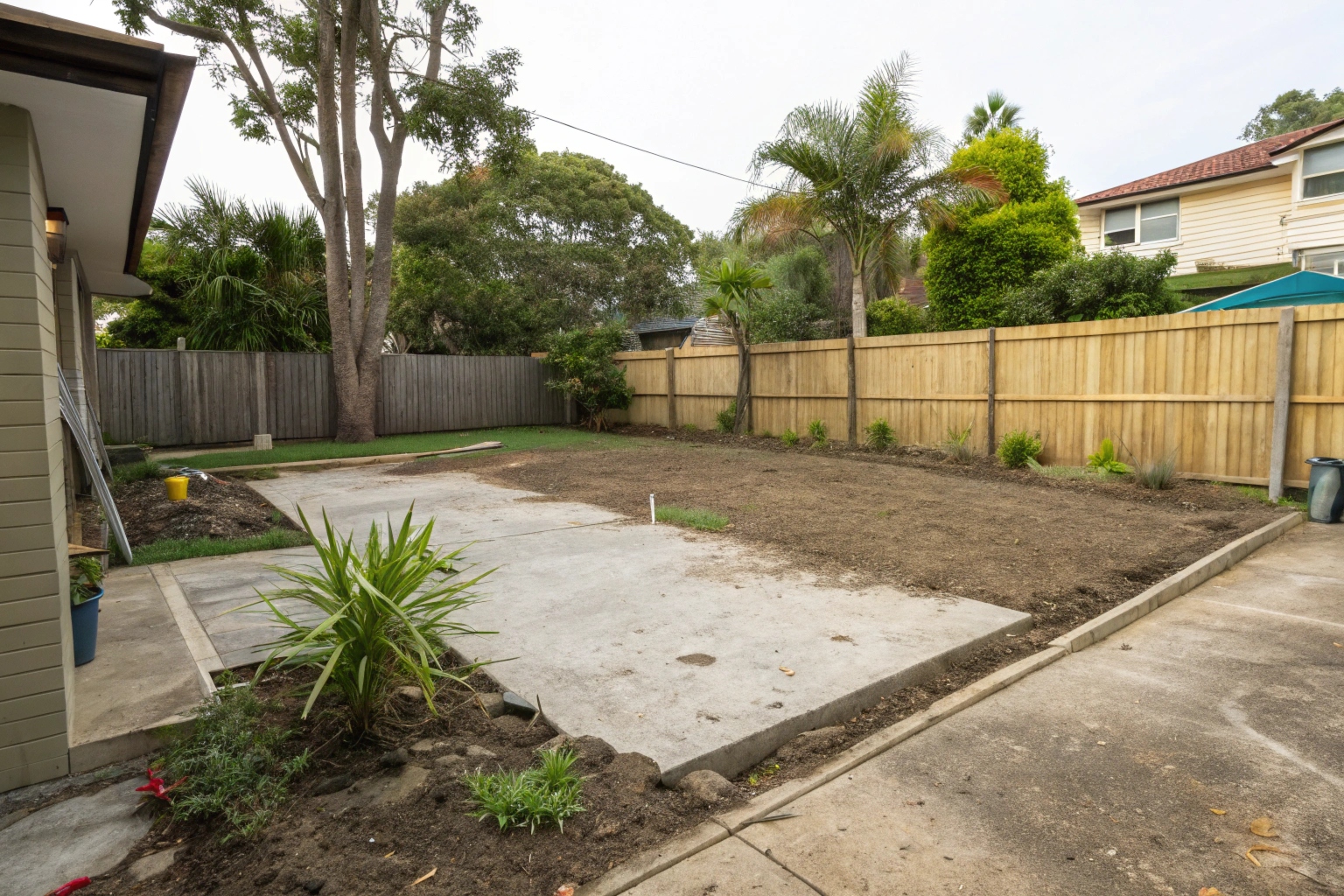
By the end of the job, the broken concrete is loaded and gone, the site is cleared of debris, and what’s left is a prepared area ready for the next stage of your project. We don’t leave a half-demolished slab and come back three days later. When we’re done, the demolition phase of your project is done — and whatever’s coming next can move forward without delay.
Concrete Demolition Coffs Harbour — Frequently Asked Questions
Concrete demolition pricing varies quite a bit depending on the size of the area, the thickness and type of concrete, whether it’s reinforced, and how accessible the site is for equipment. A small residential path is a very different job to a full driveway or commercial hardstand. The most reliable way to get an accurate figure is an on-site assessment — we can look at what’s there, understand what’s involved, and give you a clear quote rather than a rough ballpark that shifts once work begins.
For most standard residential concrete demolition — driveways, paths, patios, and slabs — a permit isn’t required. Where permits may come into play is when demolition is part of a larger building or development project that already requires council approval. We can advise you on this during the quoting stage based on the specifics of your job.
A small residential slab or path can often be broken up and removed in a single day. Larger jobs — full driveway removals, commercial floors, or sites requiring significant equipment — typically run over two to three days. We’ll give you a realistic timeframe during the quote so you can plan around it.
We handle removal and disposal as part of the service. Standard concrete goes to appropriate disposal facilities. Reinforced concrete — material with steel through it — requires separate handling and goes to facilities equipped to process it correctly. You don’t need to arrange any of that separately.
Yes. Partial demolition uses concrete saw cutting to create a clean boundary line before breaking begins. That clean cut is what allows the remaining slab to stay intact and in good condition while only the nominated section is removed.
Yes. We handle concrete demolition for residential homeowners, builders, and commercial property owners across Coffs Harbour and surrounding areas. Commercial jobs — warehouse floors, hardstand areas, loading docks — are within our scope and we have the equipment to handle them efficiently.
Get a Free Quote for Concrete Demolition in Coffs Harbour
Concrete demolition project scope varies more than most people expect before they’ve had someone actually look at the job. A small garden slab and a reinforced commercial hardstand are worlds apart in terms of equipment, time, and methodology — and even two residential driveways of similar size can be quite different jobs depending on thickness, reinforcement, and site access. That’s why we always start with an on-site assessment rather than a figure pulled from thin air over the phone.
If you’ve got existing concrete that needs to come out — whether you’re a homeowner in Toormina ready to finally replace that crumbling driveway, a builder in Sawtell who needs a slab cleared before construction can start, or a commercial property owner in the Coffs Harbour CBD with a deteriorated hardstand that’s overdue for replacement — we’re the local team to call.
We service Coffs Harbour and the wider region including Sawtell, Woolgoolga, Toormina, Boambee East, Bellingen, and Nambucca Heads. On-site quotes are free, there’s no obligation, and you’ll get a clear scope and price before any work begins.
Get in touch with A1 Concreting today to book your free on-site quote for concrete demolition in Coffs Harbour.
