Why Coffs Harbour Foundation Work Demands Local Expertise
This is where a lot of out-of-area contractors get caught out.
The Mid North Coast isn’t one uniform piece of ground. Travel ten minutes in any direction around Coffs Harbour and you can be standing on a completely different soil type — and each one behaves differently under a loaded foundation.
In the established suburban areas of Toormina, Boambee East, and Sawtell, highly reactive clay soils are common. These soils shrink and swell with moisture changes, and a foundation that isn’t designed specifically for that reactivity will move. In the beachside locations — Moonee Beach, Sandy Beach, Park Beach — you’re often dealing with sandy coastal soils that have variable bearing capacity and behave nothing like the clay country just a few kilometres inland. Head out toward the hinterland ranges around Bellingen and Nana Glen and you’re into weathered basalt and granite country. Get close to waterways and you can hit alluvial fill that needs careful assessment before any foundation design is finalised.
Add to that the region’s heavy summer rainfall, significant termite pressure, and the coastal corrosion environment that affects reinforcement cover requirements and concrete specification — and you start to see why foundation construction here isn’t a job you hand to someone who doesn’t know this ground.
A contractor who hasn’t worked extensively in this region is essentially guessing at conditions they haven’t personally encountered. That’s a risk that sits entirely with the building owner if something goes wrong down the track.
We know this ground. We’ve dug into it, poured on top of it, and built structures that have been standing on it for years. That local knowledge is something you can’t replicate from a project manual.

Soil Testing and Geotechnical Investigation
There’s a conversation we have with almost every new client, and it goes something like this — “Do I really need a soil test?”
The honest answer is yes. Every time.
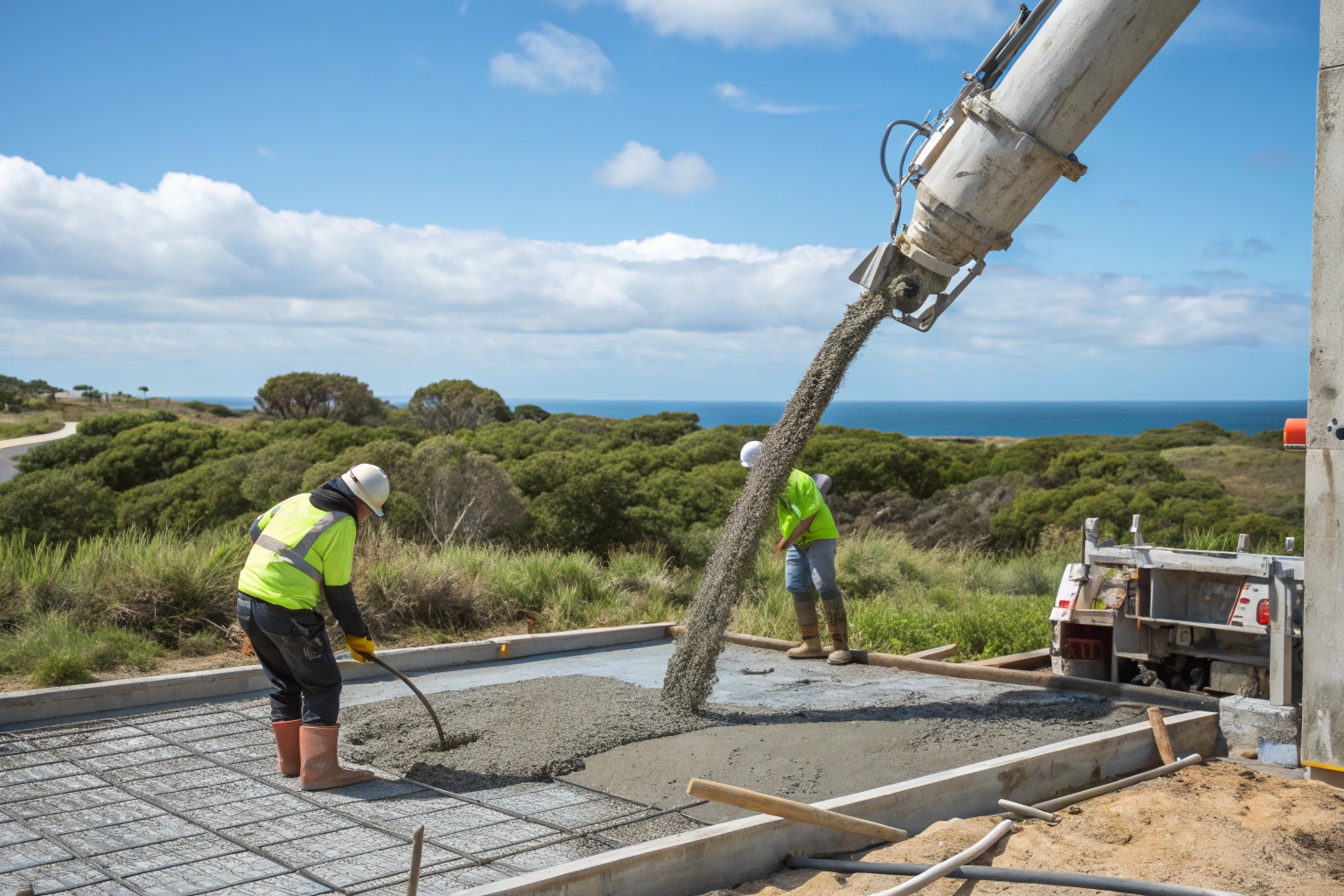
Here’s why. Before any engineer can design a foundation that will actually perform on your specific block of land, they need to know what’s in the ground. Not what’s in the ground on the street next door, or what the soil looks like on a regional map — what’s actually underneath your specific site, at the depth your foundation will be bearing on.
A soil test tells the engineer three things that cannot be assumed. First, the bearing capacity — how much load the soil can reliably carry before it starts to compress or shift. Second, the reactivity classification — how much the soil is likely to move in response to moisture changes across the seasons. Third, whether there are any anomalies in the ground profile that need to be accounted for in the design, things like soft spots, fill material, or variable rock depth that wouldn’t be visible from the surface.
In the Coffs Harbour region, assuming soil conditions without testing is a genuine risk. The variability we described earlier — clay, sand, basalt, alluvial fill across short distances — means that assumptions based on neighbouring properties can be significantly wrong for your site.
We work closely with local geotechnical consultants and structural engineers throughout this process. Our job is to make sure that by the time a foundation design reaches the construction stage, it’s been developed from actual ground data from the actual site — not from generalised assumptions that may have nothing to do with what’s sitting under your building.
Skipping the site investigation to save a few hundred dollars upfront is one of the most expensive decisions a building owner can make.
Foundation Compliance and Certification in NSW
Foundation construction on any approved building project in New South Wales isn’t just a construction task — it’s a regulated process with specific inspection and documentation requirements built into it.
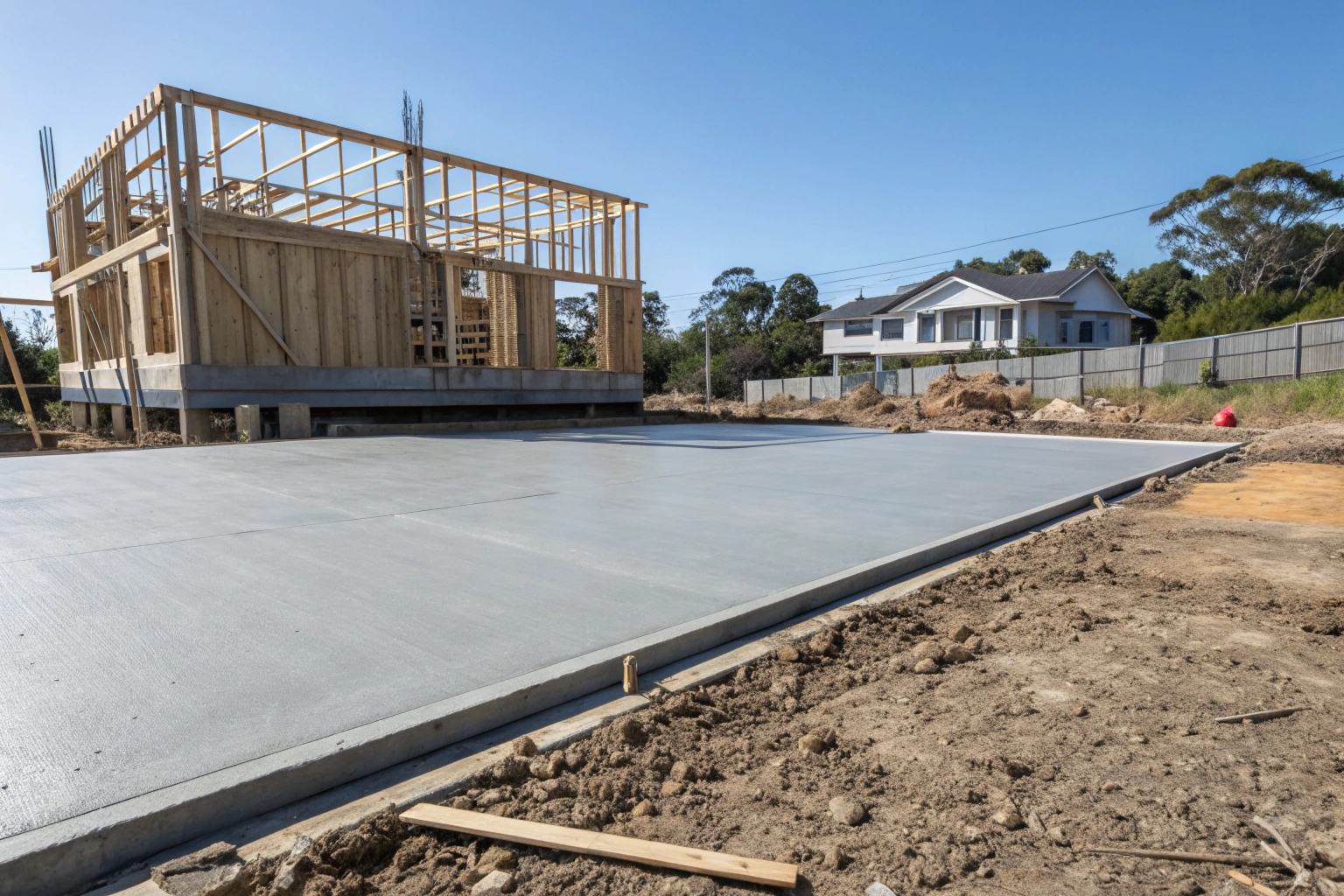
Before concrete is poured on any foundation element, there are mandatory hold points that need to be cleared by the principal certifier. These aren’t box-ticking formalities. They exist because once concrete goes in, the reinforcement is buried and inaccessible — and if the steel placement, cover, or lap lengths don’t match the engineering documentation, the foundation’s structural performance is compromised in a way that can’t be fixed without breaking out and rebuilding.
What Compliance Documentation Actually Covers
The paperwork side of foundation compliance matters more than most people realise. A properly managed foundation project generates a clear paper trail that protects the building owner, the certifier, and the contractor:
• Reinforcement placement records confirming steel was placed in accordance with the structural drawings before pour
• Concrete delivery dockets recording the mix design, strength grade, and water-cement ratio of every load placed
• Compaction test results for any subgrade preparation or fill material beneath the slab
• Hold point sign-offs from the principal certifier confirming inspection clearance at each stage
How We Manage This
We treat compliance documentation as a standard part of the service — not something we scramble to produce at the end of a job when the certifier asks for it. Every foundation project we run is managed with the inspection schedule in mind from the start. Hold points are planned into the programme, documentation is kept current throughout construction, and nothing gets poured until the clearances are in place.
For owner-builders and private clients who haven’t been through this process before, we’ll walk you through exactly what’s required and when — so there are no surprises, no delays, and no issues when the certifier shows up on site.
Get Your Contractor Involved Early
One of the most consistent patterns we see on foundation projects that run into trouble — budget blowouts, redesigns mid-construction, unexpected delays — is that the contractor wasn’t brought into the conversation until the design was already locked in.
Foundation work is not a commodity you price from a set of drawings and then execute. The specific conditions of the site have a direct bearing on what the foundation needs to be, what it’s going to cost, and how long it’s going to take. When a contractor who knows the local ground conditions is involved before design decisions are finalised, site-specific challenges get identified and addressed in the documentation — not discovered during excavation when changing direction costs significantly more.
What Early Involvement Actually Looks Like
It doesn’t need to be complicated. Before your engineer finalises the foundation design, we’ll walk the site with you, review the soil test results, and flag anything in the proposed design that may create construction difficulties given the specific conditions we’re dealing with on that block.
Common examples in this region include:
• High water table near coastal locations affecting excavation and pour timing
• Reactive clay classifications requiring specific slab thickening and edge beam depths that affect overall build cost
• Sloping sites where cut-and-fill requirements interact with the foundation design in ways that aren’t always obvious from the drawings alone
• Tree proximity and root zone management where footing depths or locations may need adjustment
Getting this input before the design is signed off costs nothing extra and can save a significant amount of money and time during construction. It also means your structural engineer has real site feedback to work with — not just a desk assessment of a soil report.
The foundation sets the budget for everything above it. Knowing what you’re dealing with early is always the better position to be in.
Why Local Builders and Homeowners Choose Us for Foundation Work
There’s no shortage of contractors who will take on a foundation job in this region. The question worth asking isn’t who’s available — it’s who genuinely understands what they’re building on and what’s at stake if they get it wrong.
Here’s what working with us actually means for your project.
We Know This Ground
We’ve poured foundations across the full geographic spread of the Mid North Coast — from the reactive clay suburbs of Toormina and Boambee East to the sandy coastal soils at Moonee Beach and the basalt country out toward the hinterland. That accumulated site knowledge informs every assessment we make and every conversation we have with engineers and certifiers on your behalf.
We Work to the Engineering Documentation
Every foundation we build is constructed precisely to the structural drawings. Reinforcement placement, cover, lap lengths, pour sequences — these are followed as documented, not approximated in the field. The engineering only performs as designed when the construction matches it exactly.
We Manage the Process End to End
From initial site assessment through to final certification sign-off, we coordinate the moving parts so you don’t have to. Geotechnical consultants, structural engineers, principal certifiers, concrete suppliers — we manage those relationships as standard.
We’re Straight With You on Budget and Programme
If a site presents challenges that will affect cost or schedule, you’ll hear about it from us before work starts — not after excavation is underway. No surprises is a commitment we take seriously on every project we run.
We service Coffs Harbour and the surrounding region including Sawtell, Woolgoolga, Toormina, Grafton, Bellingen, and Nambucca Heads.
Frequently Asked Questions About Concrete Foundations in Coffs Harbour
Foundation depth depends on the soil classification, the structural loads being imposed, and the specific site conditions. In reactive clay areas common across Toormina, Boambee East, and Sawtell, edge beams and footings often need to go deeper to get below the active zone where soil moisture movement occurs. Your structural engineer determines the required depth based on the soil test results — there’s no single answer that applies across every site in this region.
For a detailed and accurate quote, yes. Without a soil test, any foundation price is an estimate based on assumed conditions that may not reflect what’s actually in the ground on your block. In a region as geotechnically varied as the Mid North Coast, assumed conditions can be significantly different from actual conditions — and that difference shows up in the cost.
Yes, with the right planning. Wet weather concrete management — protective covering, pour timing, subgrade drainage — is something we plan for on every project running through the summer months. The heavy rainfall this region gets between November and March doesn’t stop foundation work, but it does require more careful scheduling and site management than dry season pours.
A footing transfers structural loads from columns, walls, or beams into the soil. A slab provides the floor surface that the building sits on. Most residential foundations in this region combine both — a reinforced slab with integrated edge beams and internal footings that work together as a single engineered system.
Standard structural concrete reaches sufficient strength for loading after approximately seven days under normal curing conditions. Full design strength is typically achieved at twenty-eight days. Your structural engineer and certifier will specify any minimum curing requirements before subsequent construction stages can proceed.
Yes. Secondary dwellings approved through council or a private certifier are subject to the same building code requirements as a primary dwelling. The foundation needs to be engineer-designed for the site conditions and constructed to the structural documentation — there’s no simplified standard for smaller structures on the same property.
Ready to Talk About Your Foundation? Let's Start With the Site
Foundation work is too consequential to hand to a contractor who’s guessing at your ground conditions. Whether you’re planning a new home, adding onto an existing one, building a granny flat, or working on a commercial project, the earlier we’re involved in the conversation the better the outcome for your budget, your programme, and the building itself.
We work with homeowners, owner-builders, local builders, and developers right across the Coffs Harbour region. Every project starts the same way — with a genuine assessment of what the site requires, not a templated quote based on assumed conditions that may have nothing to do with your block.
Who We Work With
• Homeowners and owner-builders planning new residential construction or extensions
• Local builders who need a reliable, documentation-focused foundation subcontractor
• Developers working on dual occupancy, secondary dwellings, or commercial projects
• Property owners dealing with existing foundation issues that need professional assessment before any remedial work is designed
Where We Work
We service Coffs Harbour and the surrounding region including Sawtell, Woolgoolga, Toormina, Boambee East, Grafton, Bellingen, and Nambucca Heads. If your project is on the Mid North Coast, get in touch and we’ll let you know if we can get out to your site.
Get Your Free Quote
Call us today for a free quote on your concrete foundation project. Bring us your soil test, your engineering drawings, or just the block address and a description of what you’re planning — we’ll take it from there and give you a straight answer on what’s involved and what it’s likely to cost.
No obligation. No pressure. Just honest advice from a contractor who knows this ground.
