
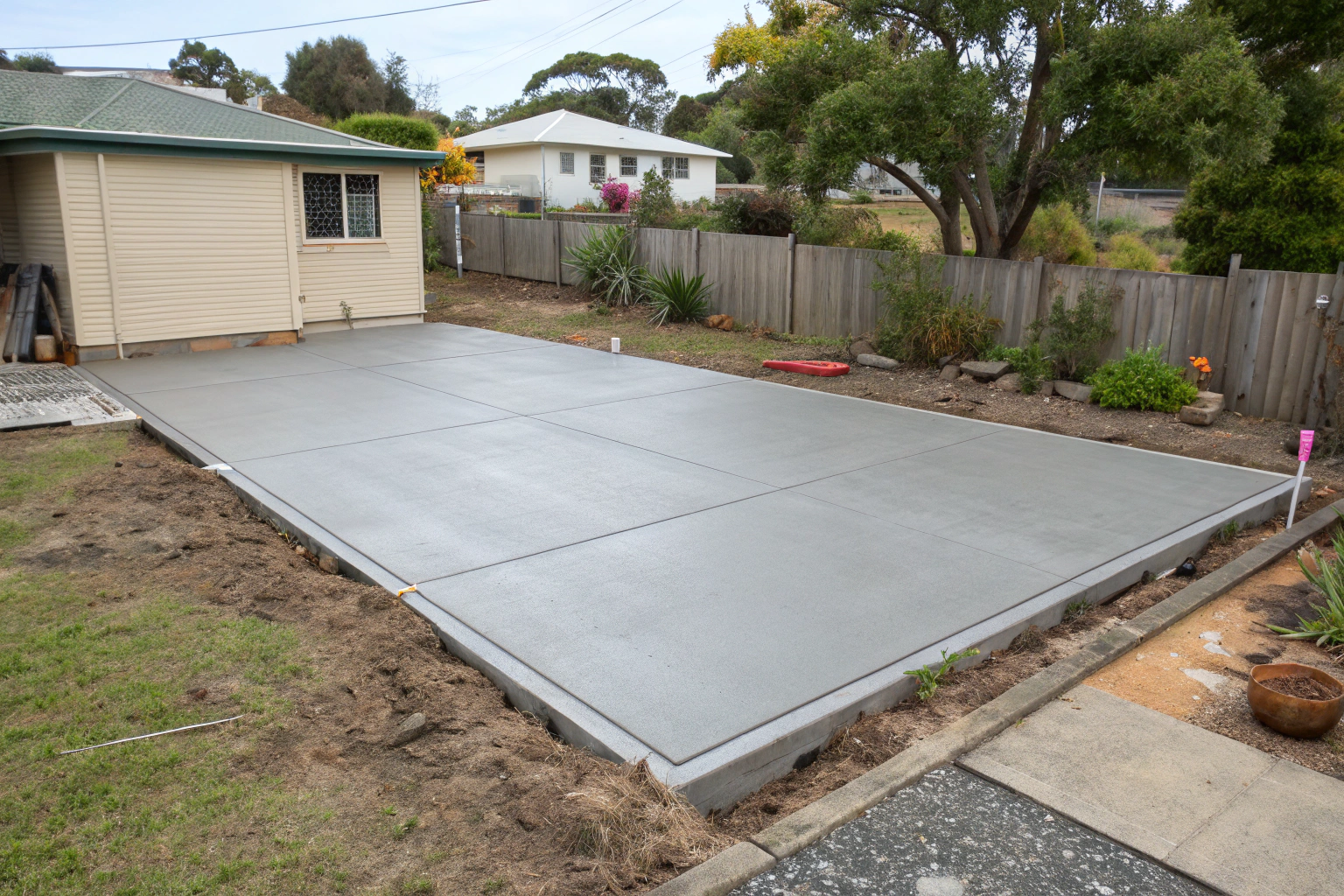
Shed Slab Construction Across Coffs Harbour
Shed slabs are one of the most common concrete jobs we handle across the Coffs Harbour region, and they’re also one of the most varied. A backyard garden shed slab on a flat suburban block in Toormina is a very different project from a large rural machinery shed slab on a sloped lifestyle block out past Bellingen — and treating them the same way is where a lot of concretors come unstuck.
Every shed slab we pour is designed around the specific site, the intended use of the shed, and the ground conditions underneath. Clay soils, sandy coastal substrates, sloped terrain — each one requires a different approach before a single metre of concrete goes down.
We work across Coffs Harbour, Sawtell, Woolgoolga, Toormina, Boambee East, Bellingen, Moonee Beach, and the surrounding hinterland. Whether you’re putting up a small storage shed or a full workshop or rural equipment shed, we assess the site first and build the slab to suit — not the other way around.

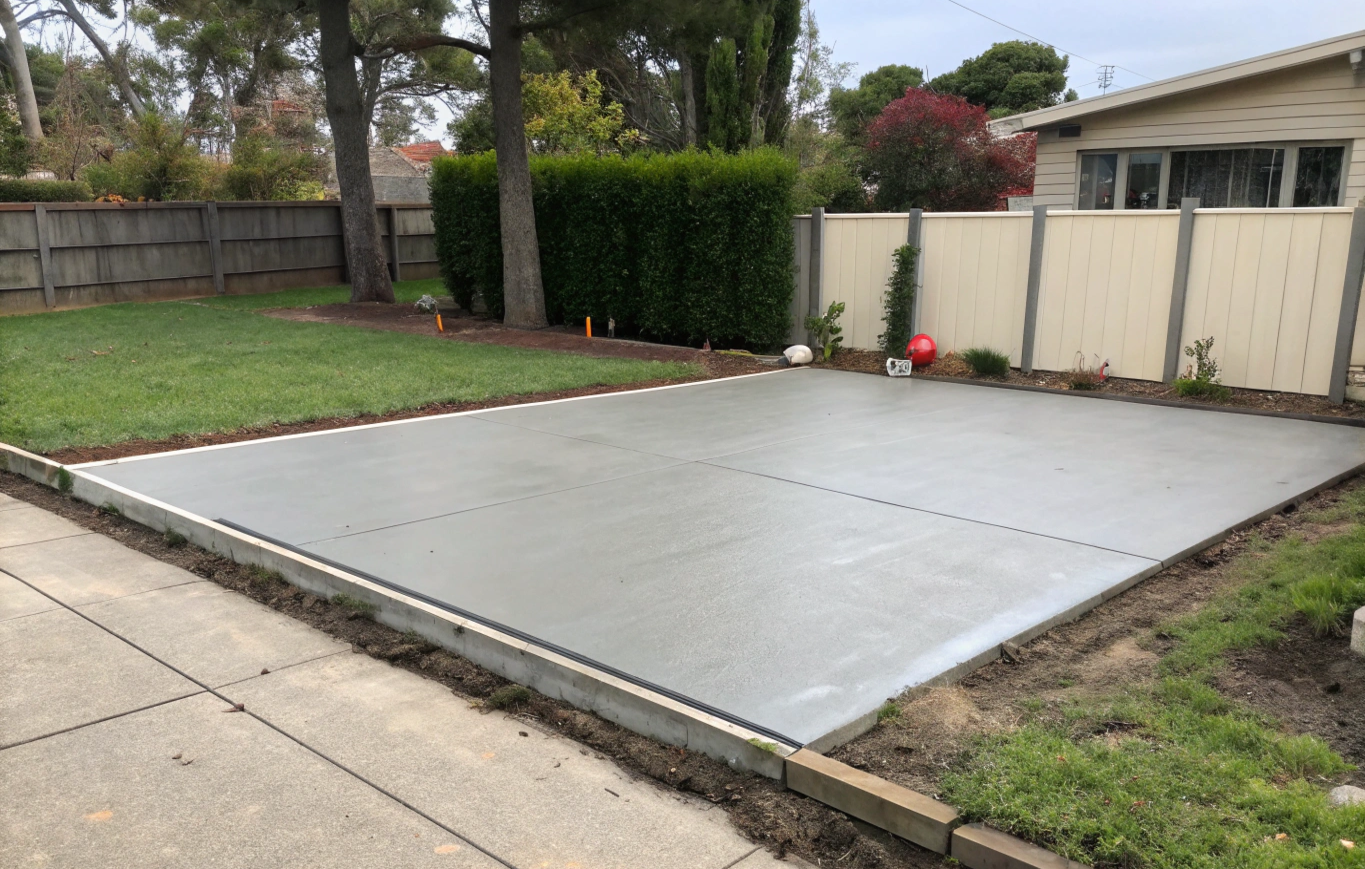
Residential Backyard Shed Slabs
Garden sheds, storage sheds, and backyard workshop sheds make up the bulk of our residential shed slab work across Coffs Harbour. These are typically smaller slabs on suburban blocks, but they still need to be correctly reinforced, properly levelled, and poured onto a well-compacted sub-base. A standard backyard shed slab done right is a straightforward job — and one that gives the shed a solid, stable foundation for the life of the structure.
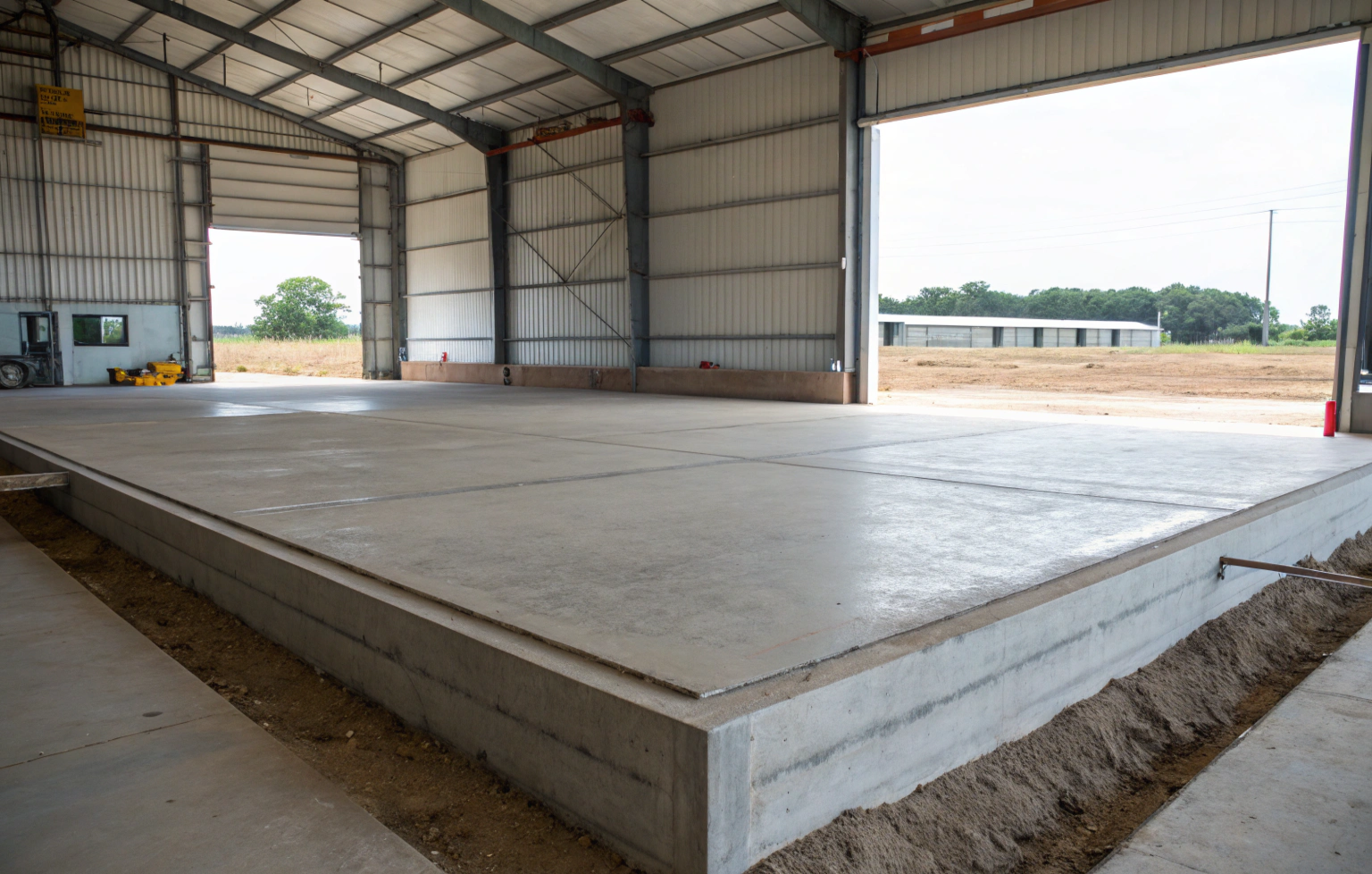
Workshop and Garage Shed Slabs Built for Heavy Use
Workshop and garage shed slabs carry a different load profile entirely. Vehicle weight, heavy equipment, compressors, hoists, and workbenches all place concentrated loads on the slab surface that a standard mesh-reinforced residential pour isn’t designed to handle. These slabs require increased concrete thickness, heavier reinforcement, and careful attention to point loads from equipment legs and tyre contact areas. We design and pour workshop slabs that hold up to real working conditions without cracking or degrading under load.
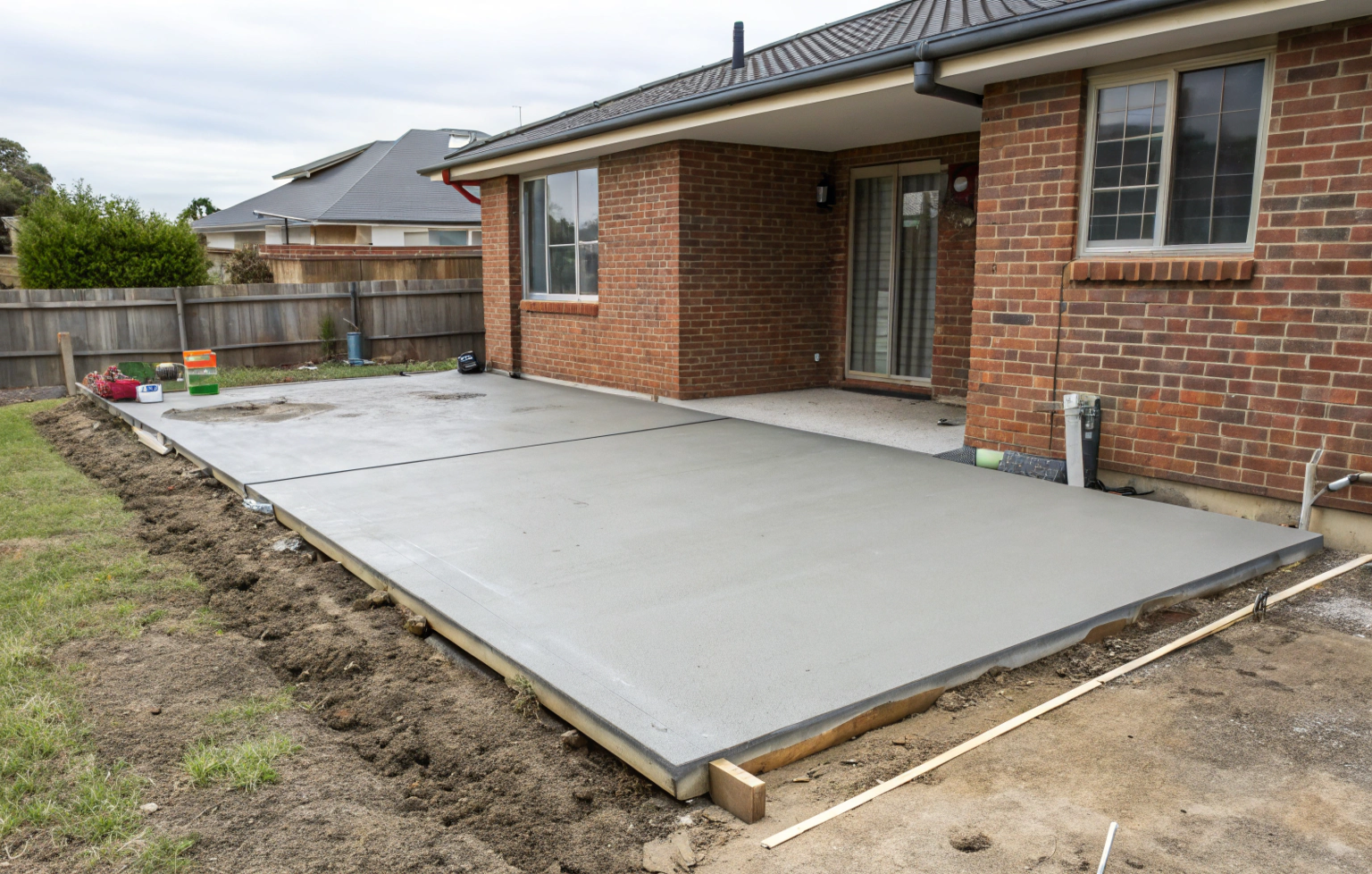
Attached Garage Slabs in Coffs Harbour
Attached garage slabs connect directly to the house structure, which adds a layer of complexity that a freestanding shed slab doesn’t carry. Level transitions, edge beam integration, and coordination with the existing building design must be correct from the start. We work through the structural requirements before forming up, so the finished slab ties in cleanly with the house and meets the specifications required by the building design.
Ground Conditions Around Coffs Harbour and What They Mean for Your Slab
Clay-heavy soils are common across many suburban and semi-rural areas around Coffs Harbour, and they’re reactive — they expand when wet and contract when dry. That cycle of movement is what cracks and distorts slabs that aren’t designed to withstand it. A slab poured directly onto reactive clay without proper preparation beneath it is working against the ground from day one.
Sandy coastal soils present a different challenge. Sand doesn’t bind the way clay does, which means the sub-base can shift and settle under load if it hasn’t been thoroughly compacted before the pour. Getting the ground firm and stable before concrete placement begins is the only way to prevent that movement from transferring up into the slab surface.
Sloped blocks — and there are plenty of them across the hilly terrain surrounding Coffs Harbour — require cut and fill earthworks or a stepped slab design to achieve a level finished surface. We assess the site before quoting, so the right approach is built into the job from the start.
Rural and Lifestyle Property Shed Slabs
Rural and lifestyle property shed slabs bring a different set of challenges to the job that a standard suburban pour doesn’t carry. Site access is often the first consideration — concrete trucks need a workable path to the pour site, and on larger rural properties, that isn’t always straightforward. Distance to the nearest batch plant affects delivery timing and pour scheduling, particularly for larger slabs, where multiple loads must arrive and be placed within a tight window.
Farming equipment sheds, machinery storage sheds, and large multipurpose rural sheds all require slabs designed around the loads they’ll carry. Heavy machinery, tractors, and stored equipment place significant demands on both the slab thickness and the reinforcement underneath — a standard residential pour won’t cut it.
Sloped or uneven ground is also common on lifestyle blocks across the Coffs Harbour hinterland, which often means cut-and-fill earthworks are required before forming-up work can begin. We manage the full scope of rural shed slab projects from initial site assessment through to finished pour, across Bellingen, Woolgoolga, Nambucca, and surrounding areas.
Reinforcement, Formwork, and Finishing
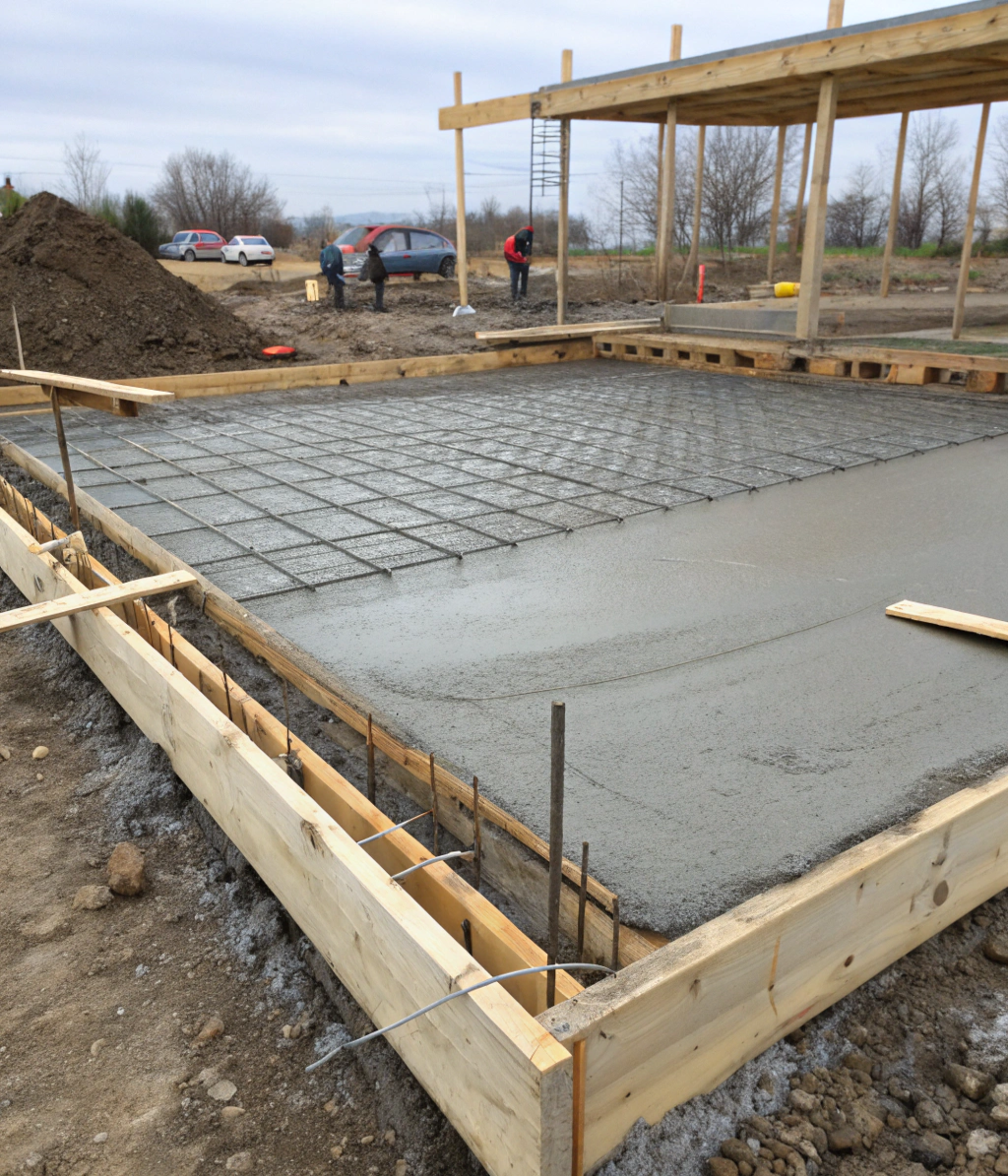
Reinforcement is what separates a shed slab that holds up from one that doesn’t. Standard residential shed slabs are typically reinforced with steel mesh. Still, site conditions, load requirements, and shed size can all drive the job toward additional bar reinforcement to handle the slab’s stresses over its service life. We specify the reinforcement to the job, not to the minimum.
Formwork defines the shape, level, and edge profile of the finished slab. It needs to be set accurately before a single barrow of concrete is moved, because once the pour starts, there’s no going back. Edge beam dimensions, bolt-down anchor positions, and chemical anchor placements all get confirmed against the shed supplier’s specifications at this stage, so the slab comes out ready for installation.
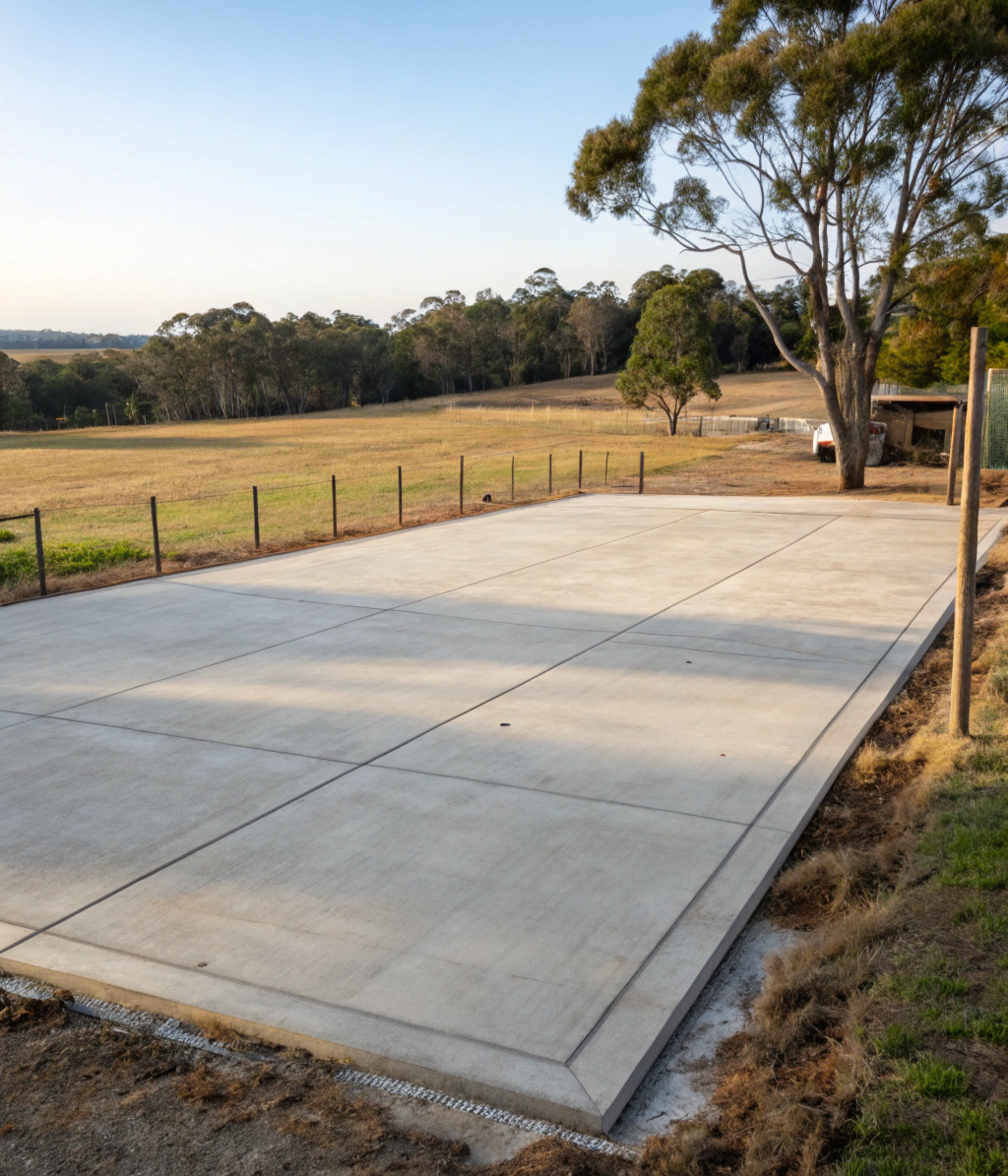
The finish on a shed slab is typically a steel trowel or broom finish, depending on the application—smooth enough to be functional, with enough texture to prevent it from becoming a slip hazard. After the pour, curing begins, and the clock starts on your installation schedule.
Meeting Your Shed Supplier’s Slab Specifications
Most shed suppliers come with a specification sheet, and it matters. Minimum slab thickness, edge beam dimensions, bolt-down anchor positions, and chemical anchor requirements are all details that need to be built into the slab design before the pour — not figured out after the concrete has set. A slab that doesn’t meet the supplier’s specs can void the shed warranty and create real headaches when the installation crew arrives on site.
We request the shed supplier’s specification documents before we provide a quote. That way, the edge beams, hold-down bolts, and anchor placements are all accounted for in the formwork stage, and the finished slab comes out ready for installation without modification or remedial work.
Different suppliers have different requirements — a Colorbond workshop shed from a local steel supplier will have a different specification from a prefabricated garage kit from a national shed company. We’ve worked across the full range and know what to look for. Bring the spec sheet to your on-site assessment, and we’ll make sure the slab we pour matches it exactly.
Shed Slab Thickness — Getting the Spec Right for Your Build
Slab thickness isn’t a one-size-fits-all number. The right spec depends on how the shed will be used, the loads the floor needs to carry, and the ground conditions beneath. A garden storage shed on a stable suburban block has very different requirements from a workshop slab that will have a vehicle driven onto it daily.
As a general guide, shed slabs across the Coffs Harbour region typically fall into these categories:
- 100mm — standard residential garden and storage sheds on stable ground with no vehicle access
- 100–125mm with additional reinforcement — backyard workshop sheds with light equipment and foot traffic
- 125–150mm — garage and vehicle access sheds with regular car or ute traffic
- 150mm and above — heavy workshop slabs, machinery storage, and rural equipment sheds carrying significant point loads
Getting the thickness wrong in either direction creates problems. Too thin, and the slab cracks under load. Over-specified without addressing the sub-base underneath, and you’ve spent money solving the wrong problem. We assess both before a number is added to your quote.
Shed Slab Drainage Considerations in Coastal NSW
Coffs Harbour gets rain — serious rain. The kind of summer downpours that turn a poorly drained shed floor into a shallow lake and accelerate the kind of moisture damage that ruins stored equipment, timber framing, and workshop tools faster than anything else. Drainage is not an afterthought on a shed slab in coastal NSW — it’s part of the design.
A correctly finished shed slab has a subtle fall built into the surface that directs water toward the open face of the shed or a drainage channel at the perimeter. On enclosed workshop sheds, a floor drain or channel drain at the entry point stops water tracking in from outside and pooling against the back wall. We also consider surface water flow around the slab perimeter — where the shed sits on the block, how the surrounding ground drains, and whether the site needs additional earthworks to keep water moving away from the structure rather than toward it.
Frequently Asked Questions About Shed Slabs in Coffs Harbour
It depends on the shed’s intended use. A standard garden shed typically needs 100mm, while workshop and vehicle access slabs require 125–150mm. Rural machinery sheds often go thicker again. We specify the job thickness after assessing the site.
Most shed suppliers require a minimum of 7 days’ curing before installation begins and 28 days for full concrete strength. Factor this into your project timeline when booking your shed delivery and installation crew.
It depends on the shed size and your property zoning. Many residential shed slabs are exempt from development, but larger structures may require a development application. Check with Coffs Harbour City Council or ask us at the time of quoting.
Yes. Sloped blocks are common across the Coffs Harbour region. Depending on the degree of slope, we use cut and fill earthworks or a stepped slab design to achieve a level, structurally sound finished surface.
Clay-heavy soils in suburban and semi-rural areas are reactive and require careful preparation. Sandy coastal soils need thorough compaction. We assess the soil conditions on every site before quoting to make sure the slab is designed accordingly.
Free On-Site Shed Slab Quotes Across Coffs Harbour and Surrounds
Shed slab pricing depends heavily on size, site conditions, and access. A flat suburban block in Toormina with good vehicle access is a very different job from a sloped rural property out past Bellingen that needs cut and fill before forming up can begin. There’s no accurate way to price a shed slab without seeing the site first — which is why we offer free on-site assessments across the full Coffs Harbour region.
We cover Coffs Harbour, Sawtell, Woolgoolga, Toormina, Boambee East, Moonee Beach, Bellingen, Nambucca, and the broader Coffs Harbour hinterland. Get in touch today to book your free on-site quote and get your shed project started on the right foundation.
